A phone can take a beautiful photograph and still miss the moment.
That sums up my mixed feelings about the vivo V80. After buying mine in Italy, I spent 48 hours using it for everyday tasks, casual games, heavier gaming, music, and a daylight photography trip around the city. Several things impressed me straight away: the surprisingly sleek body, comfortable balance, bright display, and good speakers.
Then came the camera delays.
Opening the camera, switching lenses, and waiting for photo processing interrupted an otherwise pleasant experience. I missed a couple of shots I wanted, which matters on a phone sold largely around photography.
This vivo V80 review combines those personal impressions with independent testing and published specifications. If you own an older vivo phone, the buying question is straightforward: do better endurance and a polished design justify upgrading, or would a discounted predecessor—or the vivo V70 Elite—serve you better?
Review disclosure: My hands-on observations cover 48 hours of use. Battery percentages, screen-on time, and charging events were not logged, so this is not a controlled endurance test. Laboratory findings and published specifications are attributed to their sources throughout.
Table of Contents
Vivo V80 Specifications at a Glance
| Specification | vivo V80 |
|---|---|
| Display | 6.59-inch AMOLED, 2750 × 1260 resolution, HDR10+ |
| Refresh rate | Up to 144Hz in supported games; much of everyday use runs at up to 120Hz |
| Processor | Qualcomm Snapdragon 7 Gen 4 |
| RAM | 8GB; LPDDR4X according to the reviewed configuration |
| Storage | 128GB, 256GB, or 512GB, depending on the market; no microSD slot |
| Storage type | Published specifications conflict between UFS 3.1 and UFS 4.1; confirm the exact version |
| Rear cameras | 50MP primary with OIS + 50MP 3× telephoto with OIS + 8MP ultrawide |
| Front camera | 50MP with autofocus |
| Video recording | Up to 4K at 60fps on the rear camera; up to 4K at 30fps on the front camera |
| Battery | 7,200mAh |
| Charging | 90W wired; no wireless charging |
| Launch software | Android 17 with OriginOS 7 |
| Speakers | Stereo speakers |
| Build and protection | Glass back, aluminium frame, IP68/IP69 ingress protection |
| Dimensions and weight | Approximately 157.5 × 74.3 × 7.7mm; 203g |
| eSIM | Advertised in selected markets; confirm support for your regional model and carrier |
Design and Handling: Sleeker Than Its Battery Suggests
Premium materials without an oversized feel
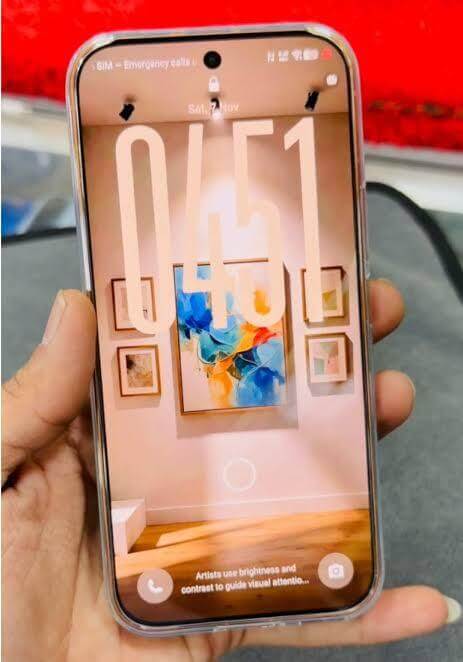
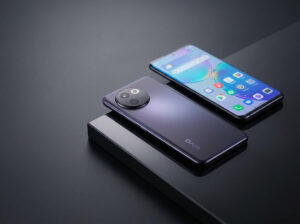
My first impression was how sleek and well-balanced the V80 felt. A large battery can leave a phone feeling thick or awkward, but that was not my reaction here.
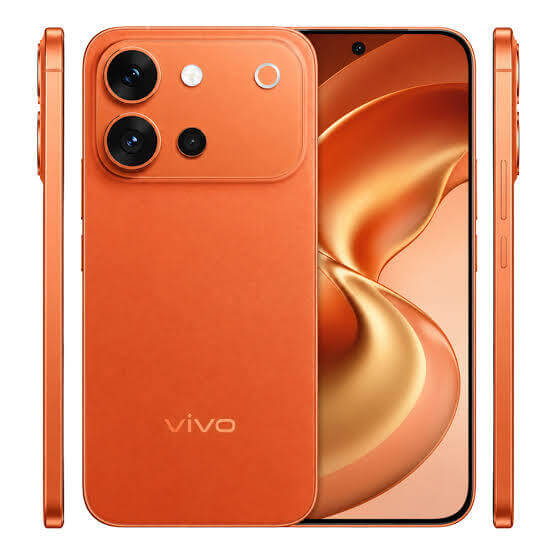
Published dimensions put the body at approximately 157.5 × 74.3 × 7.7mm, weighing 203g. Glass front and rear panels surround an aluminium frame, and the phone carries IP68/IP69 ingress-protection ratings. These details match the premium impression I got from handling it. GSMArena’s V80 specifications and introduction provide the hardware breakdown.
The balance matters as much as the measurements. A phone can look slim on a specification sheet yet feel uncomfortable during photography or extended browsing. During my time with the V80, its shape and weight distribution worked well together.
Still, 203g is not lightweight. Buyers who value minimum pocket weight should compare it directly with the V70 Elite, which weighs 187g or 194g, depending on the finish, according to vivo’s official V70 Elite specifications.
The best way I can describe it is that Vivo V80 has a premium feel with distinctive look.
Does the build justify the price?
The materials and finish help. They do not settle the value argument.
I liked holding the V80, but a premium body cannot excuse an unresponsive camera. At this price, both the physical product and its everyday behaviour need to feel polished.
Water resistance adds reassurance, though I would not treat the rating as permission for careless handling. My short ownership period cannot establish long-term durability, either. Scratch resistance, battery ageing, and years of button use require a different kind of assessment.
eSIM support: A useful extra for travel
The vivo V80 supports eSIM in selected markets, according to vivo’s official regional product information. This lets you activate a compatible mobile plan digitally without inserting a physical SIM card—a useful option when arranging a travel data plan or changing networks.
Check compatibility before buying, though. eSIM availability can depend on the regional version and your carrier, so do not assume every V80 offers the same support. For an Italian purchase, confirm the exact model with the retailer or vivo and check that your chosen network accepts it. I did not test eSIM activation during my review, so this is a connectivity feature to verify rather than a hands-on result.
Display: Excellent Visibility Under Direct Sunlight
My outdoor photo and video test
Outdoor visibility was a priority for me. I wanted to check photographs and watch videos under direct sunlight without struggling to see the screen.
The V80 passed that practical test. Brightness and visibility were great during my outing, and this became one of my favourite parts of using the phone.

That matters beyond watching content. If I cannot judge framing or see a photograph properly outdoors, a good camera loses some of its usefulness. The V80’s screen did not create that problem during my daylight use.
Its 6.59-inch AMOLED panel has a 2750 × 1260 resolution and HDR10+ support. Gadgets 360’s independent V80 review reaches a similar conclusion about sunlight readability and praises its video-watching experience.
Brightness claims need context
Published V80 specifications list 1,800-nit high-brightness mode and a 5,000-nit peak figure. Neither should be presented as my measured outdoor result. I did not use a brightness meter.
My conclusion is simpler: photos and videos remained easy to view under direct sunlight.
Measured Display Brightness Compared
My outdoor impressions are supported by the brightness results below. These measurements use a white test pattern covering 75% of the display with automatic brightness active. They should not be confused with small-area peak brightness claims.
| Phone / test label | Auto brightness, 75% white fill |
|---|---|
| vivo V80 (Gallery) | 2,107 nits |
| Motorola Edge 70 Pro | 1,980 nits |
| vivo V70 | 1,966 nits |
| vivo V70 FE | 1,890 nits |
| vivo V80 | 1,856 nits |
| Realme 16 Pro+ | 1,794 nits |
| Samsung Galaxy A57 | 1,259 nits |
| Samsung Galaxy S25 FE | 1,247 nits |
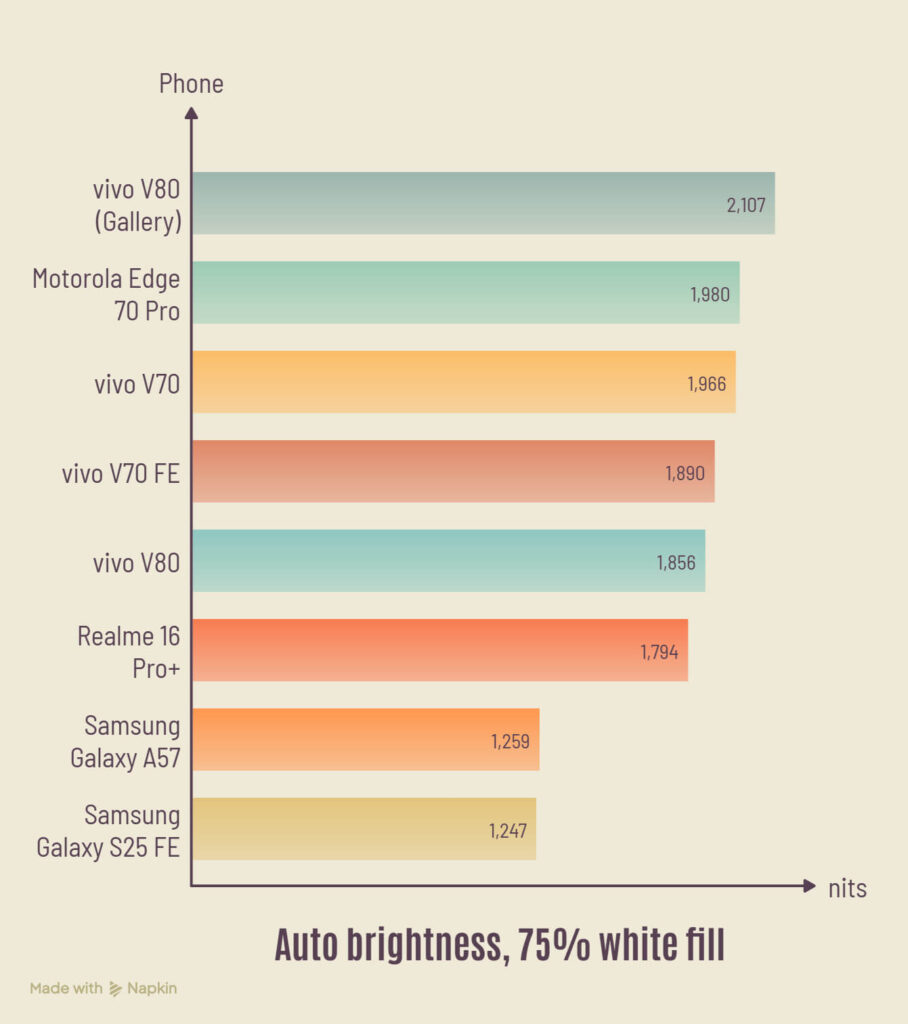
The standard V80 result reaches 1,856 nits, placing it below the V70’s 1,966 nits in this test. The separately labelled Gallery result reaches 2,107 nits. That distinction matters: quoting the higher number alone would hide the difference between the two recorded results.
For my own use, the practical takeaway was good visibility when viewing photos and videos under direct sunlight. These measurements provide comparison data, while my outdoor experience describes how the screen felt to use.
That is a useful ownership observation, but it is not a laboratory comparison against another phone. All in all I had great experience when watching videos, browsing, using social media.
Should 144Hz influence your upgrade?
Not much on its own.
Although the V80 advertises up to 144Hz, GSMArena’s assessment says that setting applies to a limited selection of supported games. Much of normal use remains a 120Hz experience.
If your current vivo already has a good 120Hz display, do not assume the V80 will feel dramatically smoother. Outdoor readability, sharpness, and panel quality deserve greater weight than the headline refresh rate.
Speakers: A Step Up I Could Appreciate
I listened to music through the phone’s speakers and came away pleased. To my ears, they sounded good and felt like a notable step up from previous generations.
That is my listening impression, not a controlled comparison covering every older vivo model. I did not measure loudness or analyse frequency response, so I would not attach precise claims about bass extension or distortion.
For everyday music and video playback, though, the speakers added to the V80’s appeal. Together with the display, they gave the phone a satisfying multimedia experience.
GSMArena’s final assessment of the V80 also lists the stereo speakers among its strengths, lending support to that positive impression.
If speakers matter to your upgrade, try a familiar track before buying. Your own music will tell you more than a maximum-volume demonstration in a noisy shop.
Battery Life: My 48-Hour Usage Experience
Everyday tasks mixed with gaming
I used the V80 over 48 hours, mixing everyday activity with plenty of casual gaming and some heavier games.
That gave me a useful sense of how the phone fits into daily life, but it was not a controlled battery rundown. I did not record starting and ending percentages, screen-on time, or every charging event. I cannot honestly describe those 48 hours as a measured two-day result from one charge.
The broader evidence still supports battery endurance as a major strength. The V80 contains a 7,200mAh battery, and Gadgets 360 reports roughly a day and a half with casual messaging, browsing, and social-media use. Its assessment drops to a full day when photography and light gaming join the workload.
For someone upgrading from an older phone whose battery has deteriorated, that could be a meaningful benefit. Just avoid treating another reviewer’s usage pattern as a guarantee for your own.
Battery Test Results Compared
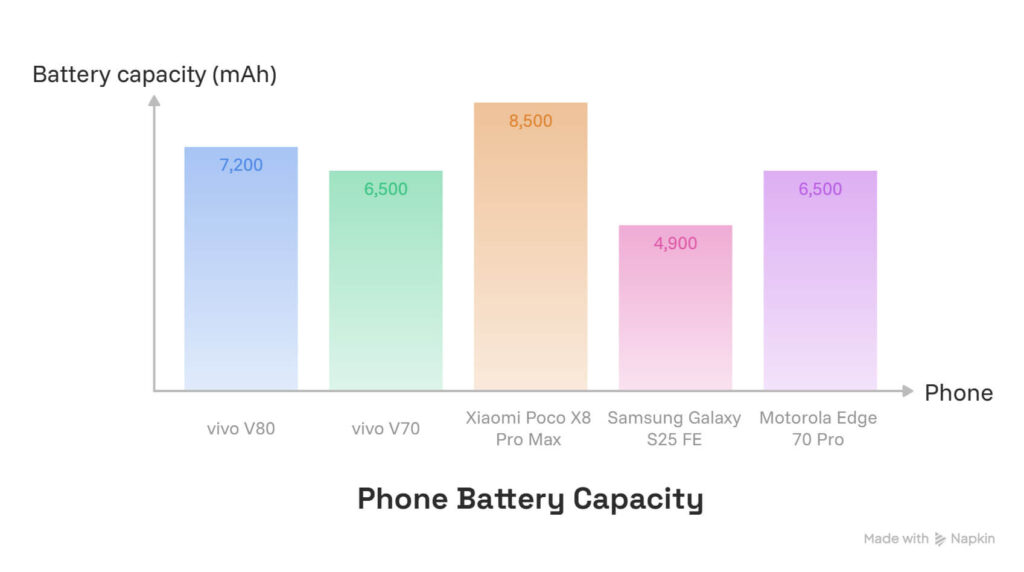
My 48-hour usage period was not a controlled battery test. For a measured comparison, the GSMArena Battery Test 2.0 results below show how the V80 performs across calls, web browsing, video playback, and gaming.
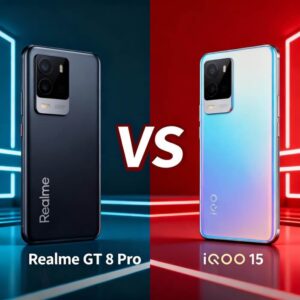
If gaming is your first priority, our Realme GT 8 Pro vs iQOO 15 comparison offers another starting point for your shortlist. Check current local prices and game-specific testing before choosing between these different classes of phone.
| Phone | Battery capacity | Active Use Score | Calls | Web browsing | Video playback | Gaming |
|---|---|---|---|---|---|---|
| vivo V80 | 7,200mAh | 17h 09m | 48h 33m | 18h 15m | 28h 55m | 7h 18m |
| vivo V70 | 6,500mAh | 16h 52m | 41h 45m | 14h 24m | 24h 11m | 9h 24m |
| Xiaomi Poco X8 Pro Max | 8,500mAh | 25h 22m | 44h 05m | 21h 26m | 34h 24m | 16h 26m |
| Samsung Galaxy S25 FE | 4,900mAh | 11h 57m | 30h 02m | 9h 40m | 16h 28m | 7h 12m |
| Motorola Edge 70 Pro | 6,500mAh | 18h 59m | 23h 25m | 17h 44m | 27h 16m | 12h 20m |
The V80 scores 17 hours and 9 minutes, just 17 minutes ahead of the V70. Its larger battery delivers longer results for calls, browsing, and video, but gaming tells a different story: 7 hours and 18 minutes versus the V70’s 9 hours and 24 minutes.
For existing V70 owners, these results weaken the argument for upgrading purely for battery life. The V80’s browsing and video endurance are appealing, but its larger capacity does not translate into longer runtime across every activity.
The gaming result is a controlled comparison, not a guarantee of seven hours in every demanding title. Your chosen game, graphics settings, brightness, network connection, and temperature can change the result.
Heavy gaming exposes the compromise
Heat was much easier to judge during my testing. After extended gaming, the V80 became noticeably hot.
That observation lines up with Gadgets 360’s gaming assessment, which reports considerable heating during longer sessions and does not recommend the phone for buyers prioritising consistently high frame rates.
This distinction matters: a large battery does not turn the V80 into a dedicated gaming phone.
Casual gaming fits its strengths better. If demanding games occupy several hours of your day, assess frame-rate consistency and comfort before being persuaded by battery capacity alone.
Charging takes roughly an hour
The V80 supports 90W wired charging, with published results placing a complete charge around an hour. GSMArena reports 53% after 30 minutes and a full charge in just under an hour; Gadgets 360 records approximately 65 minutes from empty to full.
Those are independent results, not timings from my own unit.
Wireless charging is absent. A 90W adapter was included with the reviewed packages, but buyers should confirm the contents supplied by their particular retailer.
OriginOS 7 and Performance: Plenty to Like, Some Friction
Customisation is a genuine attraction
I have mixed feelings about OriginOS 7.
The V80 ships with Android 17, and its software offers extensive control over lock screens, icons, widgets, and Control Centre. Gadgets 360 reports a commitment to four years of OS updates and six years of security patches.
If you enjoy adjusting a phone to suit your habits, that flexibility is appealing. It gives the V80 personality without requiring you to accept every default choice.
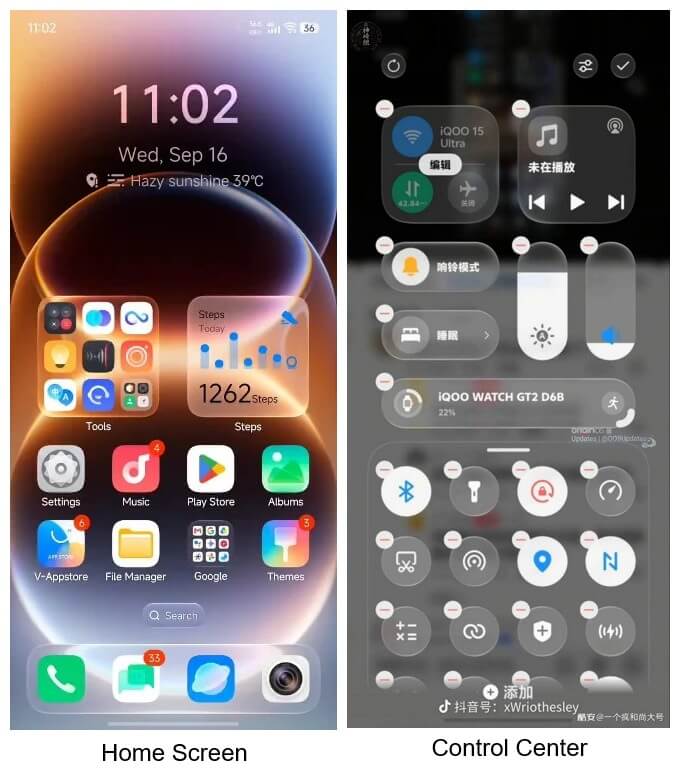
Cross-device tools are worth considering, too. TechPP’s OriginOS 7 feature guide describes vivo Office Kit features such as file sharing, clipboard synchronisation, and screen mirroring across supported Windows and Mac setups. Office Kit predates OriginOS 7, so it should not be described as an entirely new addition.
Not every advertised feature reaches this model
Software presentations can blur the distinction between an operating system and the features available on a specific handset.
TechPP reports that its V80 lacks both Liquid Glass styling and Origin Workbench. That is a useful warning against assuming every OriginOS demonstration applies to this phone.
For existing vivo owners, check which features your current device already supports or may receive through an update. New software alone is a weak reason to replace functioning hardware.
Camera delays spoiled the polish
My biggest software complaint was not a missing visual effect. It was waiting.
During my city outing, I noticed delays using the camera app, processing photos, and switching lenses. I missed a couple of good shots as a result.
Those pauses may sound minor until a moment disappears before the phone is ready. On a camera-focused handset, responsiveness belongs alongside colour, detail, and portrait quality.
Gadgets 360 reports comparable camera frustrations, including slow camera opening and delays between successive photographs.
I cannot isolate the cause. Processor capability, firmware, camera processing, and storage behaviour can all be relevant, but the available evidence does not prove which component causes these particular pauses.
My advice: Remove unwanted apps before judging everyday performance
I would spend a few minutes reviewing the preinstalled apps before settling into daily use. Cashify’s V80 review confirms that many additional apps can be uninstalled, although the exact selection can vary across regional software versions.
Start with games, shopping apps, social apps, and duplicate tools you do not use, if any are installed. Open Settings, find Apps or App management, select an unwanted app, and check for Uninstall. If that option is missing, use Disable only when the phone offers it and you understand which feature you are turning off.
- Unused third-party apps: Remove unwanted games, shopping apps, or other optional downloads when an Uninstall button is available.
- V-Appstore: Check its settings for unwanted notifications, recommendations, and automatic downloads. Do not assume it can be uninstalled or disabled on every V80 version. vivo’s official V-Appstore support covers notification controls and changing its role as the default download tool.
- Hot Apps and Hot Games: Remove these promotional shortcuts if they appear. vivo provides support for removing them from the home screen. Removing a shortcut is not the same as uninstalling an app.
- Optional vivo apps: If Browser or Themes sends unwanted promotions, check its notification and recommendation settings. Keep the app installed if your software does not offer a normal removal option.
Removing apps you never use can free storage and may reduce background activity if those apps were running. Disabling notifications mainly reduces interruptions; it does not necessarily stop an app from working in the background. Neither change should be presented as a proven fix for the V80’s camera delays or gaming heat.
Leave system components alone. I would avoid bulk debloating scripts or removing unfamiliar packages through ADB for this basic cleanup. Keep the camera, launcher, security tools, system-update services, and Google Play services intact. The goal is a cleaner phone—not trading a few unwanted icons for broken features.
Is the processor good enough for the price?
The Snapdragon 7 Gen 4 remains capable of everyday workloads. Independent testing describes messaging, browsing, email, and social apps as manageable, with occasional sluggishness opening certain applications.
I’m disappointed that vivo paired the Snapdragon 7 Gen 4 with LPDDR4X RAM at this price. I don’t need flagship performance for every task, but I do want hardware that feels like a worthwhile upgrade. This combination feels too conservative for the money, especially when camera delays already interrupt the experience. I would rather see vivo invest in faster hardware than ask buyers to pay a premium for design alone.
Published storage specifications conflict, too: Gadgets 360 describes UFS 3.1, while GSMArena lists UFS 4.1 for larger capacities and UFS 3.1 for 128GB. Confirm the exact regional configuration rather than treating either description as universal.
Camera Review: Good Photographs Need a Responsive App
vivo V80 Camera Specifications
| Camera | Sensor and aperture | ZEISS branding and key features |
|---|---|---|
| Primary | 50MP Sony LYTIA 700V; 1/1.56-inch sensor; f/1.88 | ZEISS OIS Main Camera; autofocus and optical image stabilisation |
| Telephoto | 50MP Sony IMX882; 1/1.95-inch sensor; f/2.65 | ZEISS Super Telephoto Camera; 3× optical zoom, autofocus, and optical image stabilisation |
| Ultrawide | 8MP OV08F10; f/2.2 | ZEISS Ultra Wide-Angle Camera; 115° field of view and fixed focus |
| Selfie | 50MP; sensor model not identified in the sources checked; f/2.0 | ZEISS Group Selfie Camera; autofocus and a listed 92° field of view before distortion correction |
Sony supplies the named primary and telephoto sensors, while ZEISS branding refers to vivo’s camera collaboration and optical standards. Portrait options include ZEISS-style bokeh effects and 85mm and 100mm framing modes. These modes should not be confused with separate lenses or additional optical zoom levels.
Daylight photography around the city
Most of my photography took place during daylight. I took the V80 around the city, shooting photographs and recording video rather than restricting my use to static subjects indoors.
The experience reinforced how much camera usability matters to me. Checking images on the bright display was pleasant. Waiting for the app or a lens change was not.
I would separate that experience from a detailed image-quality assessment. My notes do not establish measured sharpness, colour accuracy, stabilisation performance, or microphone quality.
But, overall I was satisfied with the camera. However, I have to add disclosure that the camera was a hit or miss in certain lighting conditions. Sometimes I felt that the scenes I was filming were brighter that what I would have liked. In the end, I was able to fix that by adjusting the exposure composition between -1 and -3. This was the only setting I played with only when the situation called for it.
I also did notice some lagging when opening the camera after the phone has been idle for some time.
Independent reviews fill part of that gap. Gadgets 360 describes detailed daylight photographs with punchy colours and good contrast. GSMArena also praises the primary camera’s photos and video.

Portraits are a strong reason to consider the V80
The camera setup includes a 50MP primary camera, a 50MP 3× telephoto, an 8MP ultrawide, and a 50MP autofocus selfie camera.
The telephoto is especially relevant for portraits. It allows tighter framing without relying on a heavy digital crop from the primary camera, and both Gadgets 360 and GSMArena assess it positively.
For buyers upgrading from a phone without a dedicated telephoto, this may be a useful change. For recent V-series owners who already have comparable hardware, the case is weaker.
If photography is your reason for upgrading, my vivo X500 Pro Max review examines the appeal of a camera-focused flagship, including telephoto flexibility, video tools, and the trade-offs in price and handling. Treat it as a different spending category rather than a direct V80 rival.
Ultrawide and nighttime results need caution
The 8MP ultrawide is the least convincing camera. Independent assessments describe weaker ultrawide detail than the other rear cameras, especially as lighting deteriorates.
Night photography is less clear-cut. GSMArena praises the primary camera’s low-light output, while Gadgets 360 reports inconsistent night results, including haze around bright lights and grain in darker areas.
My own shooting was mostly during daylight, so I cannot settle that disagreement.
If evening photography matters to you, inspect full-resolution night samples before buying. Pay attention to faces, moving subjects, bright signs, and dark backgrounds rather than judging a small preview alone.
Video capability does not tell the whole story
Published specifications list rear recording up to 4K/60fps and front recording up to 4K/30fps. GSMArena praises primary-camera video but identifies low-light telephoto video as a weakness.
I recorded clips during my outing, but my strongest documented complaint remains camera responsiveness. I would not turn those clips into unsupported claims about stabilisation or cinematic quality.
Forum Feedback: Similar Complaints, Limited Evidence
My frustration is not isolated to my unit’s reported experience.
A V80 owner’s Reddit discussion about performance and camera delays describes slow shutter response, sluggish processing, everyday lag, and heating during outdoor photography.
That is an anecdote, not proof of a widespread fault. The owner’s reported purchase price is not a universal retail price, either.
Its value lies in identifying issues worth checking. Combined with independent review observations and my own missed shots, camera responsiveness deserves attention before purchase—not an assumption that every handset behaves identically.
vivo V80 vs vivo V70 Elite: Which Upgrade Makes Sense?
The V70 Elite complicates the V80’s buying argument. According to vivo’s official V70 Elite specifications, it offers a Snapdragon 8s Gen 3, LPDDR5X memory, UFS 4.1 storage, and optional 12GB RAM.
| Category | vivo V80 | vivo V70 Elite |
|---|---|---|
| Processor | Qualcomm Snapdragon 7 Gen 4 | Qualcomm Snapdragon 8s Gen 3 |
| RAM type | LPDDR4X, according to the reviewed configuration | LPDDR5X |
| Storage type | Published specifications differ: UFS 3.1 or UFS 4.1; verify the exact capacity and regional version | UFS 4.1 |
| Display | 6.59-inch AMOLED, 2750 × 1260 resolution, up to 144Hz | 6.59-inch AMOLED, 2750 × 1260 resolution, up to 120Hz |
| Battery capacity | 7,200mAh | 6,500mAh |
| Wired charging | 90W | 90W |
| Weight | 203g | 187g or 194g, depending on the finish |
| Thickness | Approximately 7.7mm | 7.40mm or 7.59mm, depending on the finish |
| Launch software | Android 17 with OriginOS 7 | Android 16 with OriginOS 6 |
| Rear cameras | 50MP primary + 50MP 3× telephoto + 8MP ultrawide | 50MP primary + 50MP telephoto + 8MP ultrawide |
| Front camera | 50MP with autofocus | 50MP with autofocus |
| Ingress protection | IP68/IP69 | IP68/IP69 |
| Best reason to shortlist | Larger battery capacity and newer launch software | Stronger performance hardware, faster RAM, and lighter construction |
Storage caveat: Gadgets 360 lists UFS 3.1 storage for its reviewed V80 configuration, while GSMArena lists UFS 4.1 for larger capacities and UFS 3.1 for the 128GB version. These published descriptions conflict, so confirm the exact regional model before buying. The V70 Elite’s UFS 4.1 storage and LPDDR5X RAM are listed in vivo’s official specifications.
Which offers better value?
At similar prices, I favour the V70 Elite’s stronger performance package.
The V80 counters with a larger battery and newer out-of-box software. Those are useful advantages, but they do not erase its camera delays or establish it as the faster phone.
Indian pricing needs care. During this research, vivo’s official store catalogue listed the V80 8GB/128GB at ₹62,999 and V70 Elite 8GB/256GB at ₹66,999. That is ₹4,000 extra for the Elite, with double the listed storage. Retail discounts can change this calculation.
Which has the better camera?
I cannot name a proven winner.
The headline camera configurations are similar, and no verified direct comparison here establishes a clear V80 advantage. Processing can affect results, but a newer model number is not evidence of better photographs.
I would not pay extra for the V80 on camera assumptions alone.
Vivo V80 Pricing: Europe, India, and Other Markets
The vivo V80’s value changes considerably depending on where you buy it. During my price research, European listings ranged from approximately €515 for an imported unit in Germany to €728 in Italy. These are collected seller prices rather than a single official European price, and the configurations are not necessarily identical.
I bought mine in Italy, where the listings I collected ranged from €580 to €728, depending on the configuration. That difference matters: the V80 is easier to consider near the lower end, while a €728 asking price puts greater pressure on its processor, camera responsiveness, and long-term value.
Vivo V80 Price Comparison by Country
| Country / market | Collected or published price | Configuration and availability notes |
|---|---|---|
| Germany | €515–€715 | Imported units; price varies by store and seller. Confirm the exact configuration and regional version. |
| Italy | €580–€728 | Collected listings vary by configuration, including an offer at €728. |
| France | Approximately €580 | Collected listing price; confirm storage capacity, seller, and regional version. |
| Hungary | HUF 203,708 | Approximately €580 according to the collected listing. This euro equivalent has not been independently recalculated. |
| Russia | RUB 58,000–65,000 | Collected seller range; confirm configuration and whether the unit is imported. |
| China | CNY 5,317 — approximately €714 | Collected listing price, not a verified official Chinese launch price. Euro conversion uses the ECB reference rate dated November 6, 2026. |
| India: 8GB + 128GB | ₹62,999 | Official published launch price, inclusive of taxes; current retailer offers may be lower. |
| India: 8GB + 256GB | ₹69,999 | Official published launch price, inclusive of taxes; current retailer offers may be lower. |
| India: 8GB + 512GB | ₹79,999 | Official published launch price, inclusive of taxes; current retailer offers may be lower. |
| Turkey: standard V80 5G | No official local price recorded | According to my collected availability information, the standard V80 5G had not officially launched locally when these prices were recorded. |
| Turkey: V80 Lite 5G | TRY 37,999 | A different model. This price should not be treated as the Turkish price of the standard V80. |
Indian Launch Prices Are Not Always Current Selling Prices
The Indian figures above provide a consistent reference across storage options, but they should not be mistaken for the lowest available offers. At the time of this pricing update, Gadgets 360’s price tracker showed selected 128GB listings from approximately ₹51,458 and selected 256GB listings from approximately ₹59,311.
Check the actual checkout price before comparing phones. A direct discount, bank-card cashback, and an exchange offer are different things, so avoid judging value using a promotional price you cannot personally access.
My Buying Advice: Judge the V80 at Your Actual Price
A V80 priced around €515–€580 deserves a different verdict from the same phone at €728. Near the lower end, its bright display, sleek handling, pleasing speakers, and battery capacity create a stronger buying argument. Near the upper end, I find the Snapdragon 7 Gen 4, LPDDR4X memory listed for the reviewed configuration, and camera delays harder to accept.
Before choosing the cheapest listing, compare the exact RAM and storage configuration, regional firmware, network compatibility, eSIM availability, warranty arrangements, return policy, and included charger. For an imported unit, ask whether the advertised price includes delivery and any applicable import charges.
Regional checks matter beyond vivo. My guide to regional differences in the Oppo Find X10 explains why a familiar model name does not guarantee identical hardware across countries. It is another reason to check the exact version before treating an imported phone as a bargain.
I would compare a local V80 offer against the V70 Elite at the same time. A small price gap may favour the Elite’s stronger performance hardware, while a discounted V80 could suit someone who values battery capacity and everyday media use above demanding gaming.
Should You Upgrade Your Current vivo?
From an older or tired phone
The V80 deserves consideration if your current device struggles with battery endurance, outdoor visibility, or photography flexibility.
Its sleek handling, readable screen, pleasing speakers, and larger battery create a convincing everyday package. Those were the qualities I appreciated most.
If you are comparing other vivo options, my vivo V70 FE review examines a different balance of battery life, display size, and everyday performance. Pay attention to the camera differences, though: the V70 FE does not offer a dedicated telephoto camera.
From a recent V60 or V70
I would be cautious.
GSMArena notes that recent predecessors share much of the V80’s hardware, with changes centred on design, battery capacity, and smaller refinements. A discounted older model may provide much of the experience for less money.
If your existing phone still works well, identify a specific problem the V80 solves. A familiar processor and a selectively available 144Hz mode are not strong upgrade reasons.
Vivo V80 Review Verdict: Is It Worth Upgrading?
My 48-hour experience left me liking the vivo V80 without feeling ready to recommend it unconditionally.
The sleek, well-balanced body felt good. Outdoor photos and videos were easy to view under direct sunlight. Music playback sounded good and felt like a step up from previous generations.
Extended gaming produced noticeable heat, though, and the camera delays mattered more than I wanted. Missing a couple of shots changed how I judged the phone: attractive results are useful only when the camera is ready.
For battery-focused users moving from an older vivo, a well-priced V80 could fit nicely. For recent V-series owners or performance-focused buyers, the upgrade is harder to justify.
Before paying, open the camera from the lock screen, switch lenses, take several consecutive photos, and check the V70 Elite’s price beside it. Choose the phone that responds well to your own habits—not simply the newer model number.