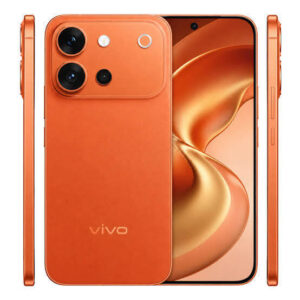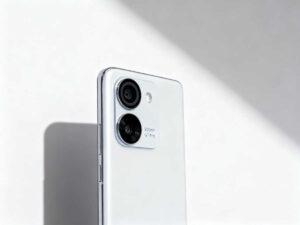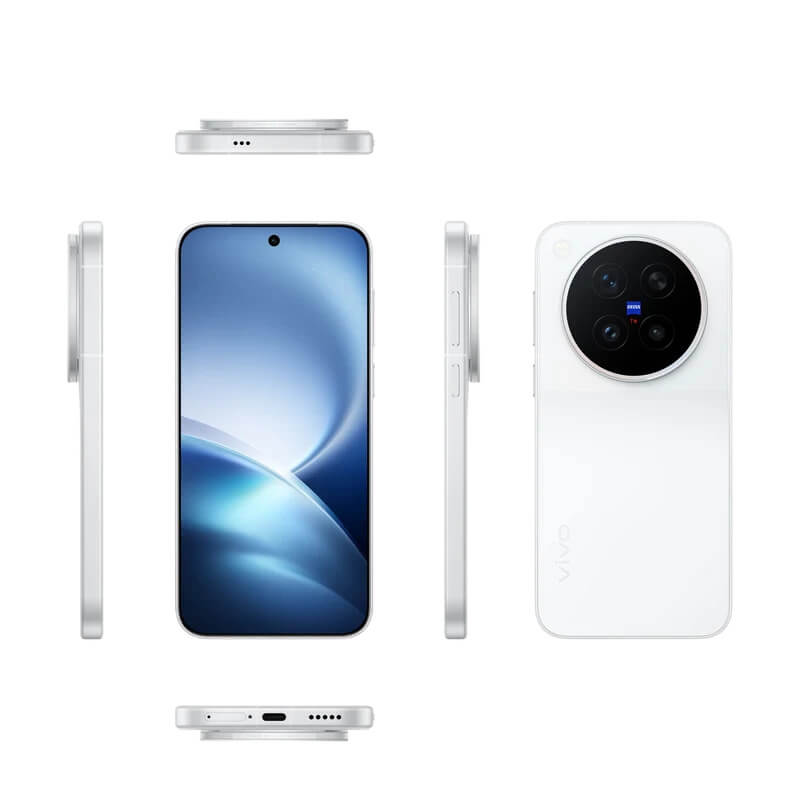
Small flagship phones tend to ask for a compromise. Choose easier handling, then accept shorter battery life, a weaker zoom camera or fewer features.
Vivo takes a different approach here. A 6.36-inch display, Dimensity 9600 Pro processor, LOFIC primary camera and a 6,510mAh battery give certain X500 Pro versions a convincing specification sheet. Selected European markets receive a smaller 5,300mAh battery, though, so your buying decision needs to start before checkout.
My interest comes down to a simple question: can this smaller vivo replace a large camera flagship without leaving buyers frustrated?
This vivo X500 Pro review examines handling, display quality, published battery results, cameras, gaming and price. Each section separates measured results from personal judgment.
Review method: This research-based review uses manufacturer documents and independent testing. TechInDeep has not supplied hands-on measurements or ownership notes. Personal comments express editorial opinions; test results belong to their credited sources.
Table of Contents
vivo X500 Pro Review: Quick Verdict and Who Should Buy It
Choose X500 Pro if you want a smaller Android flagship for portraits, everyday photography, video and mixed daily use. Independent tests support its bright screen, capable speakers, strong primary camera and excellent endurance for its 6,510mAh version.
I would shortlist this phone for someone tired of carrying a large camera flagship. Its appeal comes from keeping useful features rather than chasing every possible specification.
My recommendation carries three conditions: check battery capacity, compare local prices and consider how much long-distance photography matters to you.
Pro Max offers better distant detail. High-frame-rate gaming support has restrictions. Buyers receiving a 5,300mAh unit cannot assume published 6,510mAh endurance results apply to their purchase.
vivo X500 Pro Specifications at a Glance
Here are the key specifications to check before buying. Battery capacity, storage availability and certain connectivity features vary across regional versions.
| Feature | Specification |
|---|---|
| Display | 6.36-inch LTPO AMOLED, 1216 × 2660 pixels, up to 144Hz, Dolby Vision and HDR10+ |
| Processor | MediaTek Dimensity 9600 Pro, 2nm |
| RAM and storage | 12GB RAM; 256GB, 512GB or 1TB UFS 4.1 storage; no microSD slot |
| Primary camera | 50MP, 1/1.28-inch sensor, LOFIC, f/1.6, optical image stabilization |
| Telephoto camera | 64MP periscope, 3.5x optical zoom, f/2.5, optical image stabilization |
| Ultrawide camera | 50MP, 119° field of view, autofocus |
| Front camera | 50MP, autofocus, up to 4K60 video |
| Battery | 6,510mAh or 5,300mAh, depending on regional version |
| Charging | 90W wired FlashCharge and 40W proprietary wireless charging |
| Software at launch | Android 17 and OriginOS 7 |
| Build and protection | Aluminum frame; glass or glass-fiber-reinforced plastic back; IP68/IP69 ratings |
| Dimensions and weight | 151.8 × 71.9 × 8.1mm; 192g or 197g, depending on finish |
| Other useful features | Stereo speakers, ultrasonic fingerprint reader, NFC and USB-C 3.2 |
Source: vivo X500 Pro specification listing. Check local availability and the exact model before ordering. Maximum refresh rate depends on the application; advertised charging speeds require compatible equipment.
Design and Handling: Compact, Not Featherweight
According to GSMArena’s X500 Pro specification listing, dimensions reach 151.8 × 71.9 × 8.1mm. Weight varies between 192g and 197g across finishes.
An aluminum frame surrounds a glass or glass-fiber-reinforced plastic back. IP68/IP69 ratings add protection against dust and water under specified test conditions.
Width interests me most. At 71.9mm, X500 Pro offers a narrower alternative to large Ultra-style phones. Weight still approaches 200g, so “compact” should not suggest an almost weightless handset.
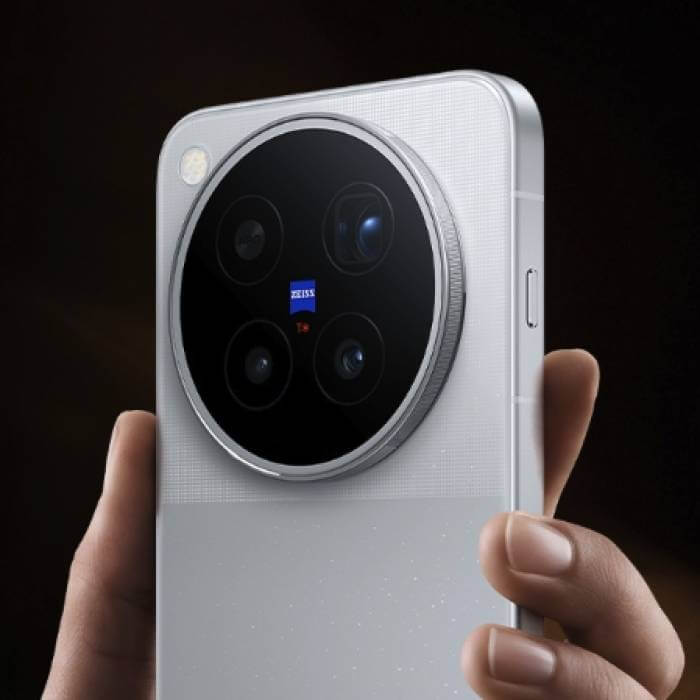
I like this distinction. Buyers can want easier handling without wanting a basic phone.
GSMArena’s review introduction explains another point worth considering: vivo has changed its product positioning. Pro Max now fills a role closer to earlier large Pro models. X500 Pro targets a different audience.
That means choosing Pro Max is not simply choosing a better version of an identical experience. Size is part of your purchase, not a detail to ignore until your phone arrives.
Display and Speakers: Flagship Quality Without Extra Bulk
Display Brightness Comparison: Automatic Mode
A 6.36-inch LTPO AMOLED panel delivers 1216 × 2660 resolution, roughly 459 pixels per inch, plus Dolby Vision and HDR10+ support.
X500 Pro recorded 2,525 nits during automatic brightness testing using a 75% white pattern. Here is how that result compares against other phones tested under matching conditions.
| Smartphone | Brightness | Test setting |
|---|---|---|
| vivo X500 Pro | 2,525 nits | Automatic, 75% white fill |
| Google Pixel 11 Pro | 2,426 nits | Automatic, 75% white fill |
| Oppo Reno16 Pro | 1,190 nits | Automatic, 75% white fill |
| Oppo Reno16 | 1,155 nits | Automatic, 75% white fill |
| Xiaomi 17 | 1,087 nits | Automatic, 75% white fill |
| Apple iPhone 17 | 1,012 nits | Automatic, 75% white fill |
| Apple iPhone 18 Pro | 971 nits | Automatic, 75% white fill |
Source: GSMArena display brightness comparison. Values transcribed from its automatic-mode chart using a 75% white test pattern.
X500 Pro leads this group, narrowly ahead of Pixel 11 Pro. My takeaway: large-area brightness deserves greater attention than a small-window peak when judging outdoor reading. Reflections, screen coatings and ambient conditions still affect visibility.
Separate measurements reached 5,391 nits using a smaller 10% white window and 781 nits through manual brightness control. These results describe different conditions, so they should not be treated as interchangeable brightness ratings.
I would keep automatic brightness active outdoors rather than judge this panel from its manual slider alone.
144Hz needs a little context
Vivo advertises up to 144Hz, but GSMArena found that ordinary interface use tops out at 120Hz. Many applications ran at 90Hz, and certain tested games stayed at 60fps despite a faster screen refresh.
That distinction matters. Refresh rate and game frame rate are not interchangeable.
Questions about saturated colors need similar care. A Reddit thread asking about display saturation names Pro Max rather than compact Pro. Its retrieved version contained no replies.
I would not treat an unanswered question as proof of inaccurate colors. Camera processing and display calibration need separate assessments, too.
Speakers deserve credit
GSMArena measured −24.3 LUFS and awarded its “Very Good” loudness classification. Reviewers praised clean mids and controlled treble, placing compact Pro ahead of Pro Max for loudness during that test.
I appreciate this result. A phone used for podcasts, calls and videos needs decent audio, regardless of camera specifications.
vivo X500 Pro Battery Life: Check Your Regional Version
6,510mAh and 5,300mAh versions are not equivalent
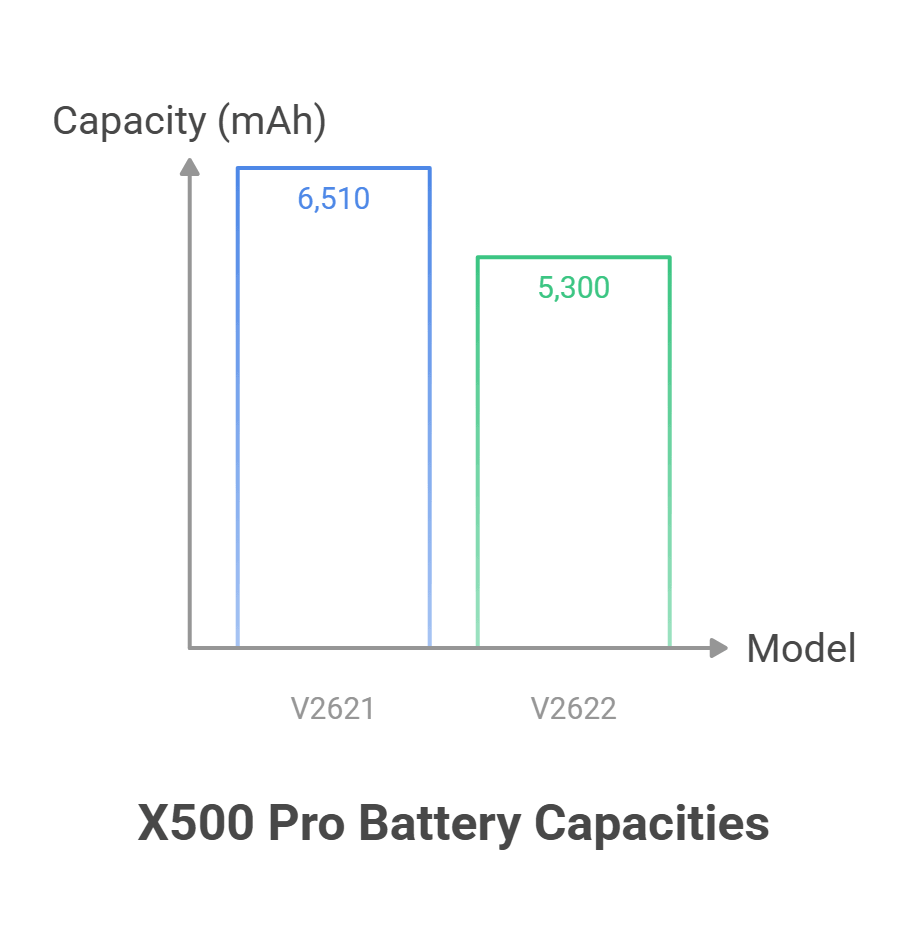
Battery capacity is this phone’s biggest shopping complication.
GSMArena tested model V2621, equipped with 6,510mAh. Its review identifies a separate V2622, carrying 5,300mAh, for selected markets including Germany, Austria and Switzerland.
Other European markets receive 6,510mAh. Calling every European X500 Pro a smaller-battery version would be inaccurate.
The 5,300mAh version has about 19% less nominal capacity than the 6,510mAh model. That does not mean runtime drops by exactly 19%.
Vivo reportedly attributed this regional split to “logistics requirements.” Available evidence does not establish an EU-wide rule forcing every European device to use 5,300mAh.
My advice is simple: ask for a model number and battery specification before paying. A generic “European version” description is not enough.
Published endurance results are excellent—for V2621
| Test | Result | Useful context |
|---|---|---|
| Active-use score | 22h 30m | Composite workload, not guaranteed screen-on time |
| Web browsing | 25h 02m | Controlled browsing test |
| Video playback | 31h 12m | Controlled playback test |
| Gaming | 11h 30m | Test-specific workload, not every game at maximum settings |
| Charge after 15 minutes | 34% | Starting near empty using vivo charging equipment |
| Charge after 30 minutes | 63% | Same charging setup |
| Full charge | 52 minutes | Not a measured 20–100% interval |
Source: GSMArena’s battery and charging measurements.
For comparison, Pro Max achieved 24h 06m of active use. Compact Pro finishes surprisingly close during this particular test.
I read these results as good evidence for comfortable all-day use. Moderate users may stretch into a second day, but navigation, mobile reception, camera use and gaming will change individual results.
No equivalent independent endurance result for 5,300mAh V2622 was verified during this research. I would not transfer V2621’s numbers to that version.
Charging is quick, but check your accessories
X500 Pro supports 90W wired FlashCharge and 40W proprietary wireless charging. Standard USB-PD charging works, but does not guarantee identical speeds.
GSMArena’s European review package omitted a charger, although selected sales bundles included charging equipment. That can change your final purchase cost.
Exact 20–100% timing remains unverified. Calculating 80% of a full-charge result would produce a poor estimate, as charging speed changes throughout each session.
I prefer practical battery controls to wattage bragging rights. Adjustable charging limits, smart charging and bypass charging give owners useful choices for daily charging and plugged-in gaming.
Performance and Gaming: Fast, But Not a Dedicated Gaming Phone
Dimensity 9600 Pro gives this compact vivo flagship-level processing capability.
Geekbench Scores: CPU Performance Compared
X500 Pro recorded 3,227 single-core and 11,558 multi-core points through Geekbench 6. Geekbench 7 returned 3,215 and 10,481 points respectively.
Published results below keep each test version separate.
A dash means no matching result was available for this comparison. Scores from different Geekbench versions should not be compared directly.
| Smartphone | Chipset | Geekbench 6 single-core | Geekbench 6 multi-core | Geekbench 7 single-core | Geekbench 7 multi-core |
|---|---|---|---|---|---|
| vivo X500 Pro | Dimensity 9600 Pro | 3,227 | 11,558 | 3,215 | 10,481 |
| Apple iPhone 18 Pro | Apple A20 Pro | 4,732 | 12,641 | 4,031 | 11,411 |
| vivo X500 Pro Max | Dimensity 9600 Pro | 3,201 | — | — | — |
| vivo X300 Ultra | Snapdragon 8 Elite Gen 5 | — | 11,494 | 3,126 | 10,145 |
| vivo X300 Pro | Dimensity 9500 | 3,473 | — | — | — |
| vivo X300 | Dimensity 9500 | 3,446 | — | — | — |
| Samsung Galaxy S26 | Exynos 2600 | — | — | — | 10,655 |
| Google Pixel 11 Pro | Google Tensor G6 | — | 7,415 | 2,291 | 6,947 |
My takeaway: X500 Pro competes closely against X300 Ultra across the available CPU results. Its Geekbench 6 multi-core lead is small, rather than evidence of a large generational jump. iPhone 18 Pro scores higher across all four listed categories.
Geekbench 6 single-core results deserve context, too: X300 and X300 Pro score above X500 Pro. A newer processor does not automatically win every test, and a single CPU score cannot settle a buying decision.
AnTuTu Scores: Comparing Published Results
X500 Pro scored 3,933,909 through AnTuTu v11 and 4,261,232 through AnTuTu v12. Keep those versions separate when comparing phones; a larger number across different versions does not establish a performance gain.
| Smartphone | Chipset | Tested RAM / storage | AnTuTu v11 | AnTuTu v12 |
|---|---|---|---|---|
| vivo X500 Pro | Dimensity 9600 Pro | 12GB / 512GB | 3,933,909 | 4,261,232 |
| vivo X500 Pro Max | Dimensity 9600 Pro | 12GB / 1TB | 4,047,399 | 4,249,918 |
| vivo X300 Ultra | Snapdragon 8 Elite Gen 5 | 16GB / 1TB | 4,085,695 | — |
| vivo X300 Pro | Dimensity 9500 | 16GB / 512GB | 3,533,222 | — |
| Samsung Galaxy S26 | Exynos 2600 | 12GB / 256GB | — | 3,573,561 |
| Google Pixel 11 Pro | Google Tensor G6 | 12GB / 256GB | — | 1,875,531 |
| Google Pixel 11 | Google Tensor G6 | 12GB / 256GB | 1,836,850 | 1,733,583 |
| vivo V70 | Snapdragon 7 Gen 4 | 12GB / 512GB | 1,481,758 | — |
| Oppo Reno16 | Snapdragon 7 Gen 4 | 8GB / 256GB | 1,458,076 | — |
Compact Pro and Pro Max trade places across these AnTuTu versions. Pro Max leads through v11, but compact Pro finishes slightly ahead through v12. I would not choose either phone based on those differences alone.
For me, these results support buying X500 Pro for its smaller size without assuming a large performance penalty against Pro Max. Sustained gaming, heat and game-specific frame rates still need separate consideration.
Sustained gaming results require caution. GSMArena recorded a drop during graphics stress, and Android Headlines reported lower stress-test stability under its test conditions.
Different firmware, settings or conditions could contribute. Available evidence does not settle that disagreement.
Add game-specific frame-rate limits, and my recommendation changes depending on your priorities. For photography plus occasional gaming, X500 Pro looks sensible. For long competitive sessions at maximum frame rates, I would investigate game-specific testing before buying.
OriginOS and Updates: Good Commitments, Regional Caveats
X500 Pro ships running Android 17 and OriginOS 7. Its software supports extensive multitasking, cross-device tools, wired external displays and desktop-style operation.
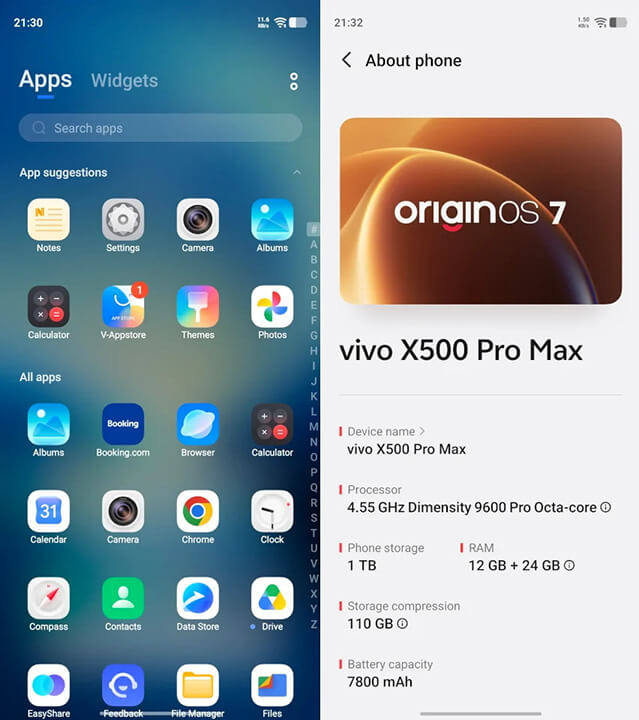
Computer-related features interest me most: file transfers, shared clipboard functions and webcam use can be useful additions. Check compatibility against your computer and regional software before treating every advertised function as available.
GSMArena notes occasional readability problems from translucent interface elements. Refresh-rate behavior has inconsistencies, too.
For long-term support, vivo’s official security page lists X500 Pro for monthly security updates.
Its Android Enterprise Recommended table names security support until at least November 2031 and Android versions through Android 22. That table carries an enterprise-user qualification, so quoting those details as a universal promise for every imported version would go too far.
Vivo acknowledges regional delays and variation. My judgment stays cautiously positive: documented support is encouraging, but a long promise and a reliable rollout schedule are different things.
vivo X500 Pro Camera Review: Strong at Native Focal Lengths
vivo X500 Pro Camera Specifications
X500 Pro pairs a 50MP LOFIC primary camera with a 64MP periscope telephoto, a 50MP ultrawide and a 50MP autofocus selfie camera. Here is a closer look at the hardware and recording options.
| Camera | Sensor | Lens and focus | Stabilization | Video recording |
|---|---|---|---|---|
| Primary | 50MP Sony Lytia L910; 1/1.28-inch sensor; LOFIC | 24mm equivalent; f/1.57; phase-detection autofocus | Optical image stabilization | Up to 8K30 or 4K240 |
| Periscope telephoto | 64MP Sony Lytia 610; 1/2-inch sensor | 85mm equivalent; 3.5x optical zoom; f/2.52; phase-detection autofocus | Optical image stabilization | Up to 8K30 or 4K120 |
| Ultrawide | 50MP Samsung ISOCELL JN5; 1/2.75-inch sensor | 15mm equivalent; f/2.0; phase-detection autofocus | No optical image stabilization listed | Up to 4K60 |
| Front | 50MP Samsung ISOCELL JN1; 1/2.75-inch sensor | 20mm equivalent; f/2.0; phase-detection autofocus | No optical image stabilization listed | Up to 4K60 |
Source: GSMArena’s detailed camera specifications. Focal lengths are 35mm equivalents. Recording resolutions and frame rates describe separate modes, not settings available simultaneously.
All four cameras support 4K30 and 4K60. Dolby Vision and Log recording are available in supported modes, but not at 8K30 or 4K240. The telephoto camera focuses from approximately 18cm for close-up photography.
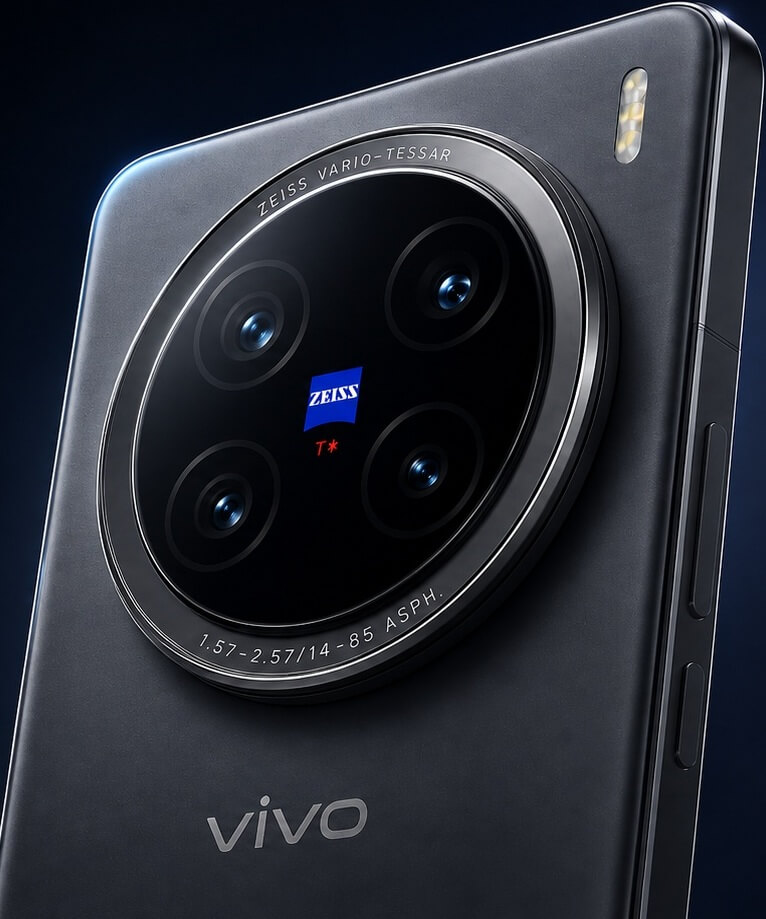
Primary camera: a good reason to shortlist this phone
A 50MP Sony Lytia L910 sensor handles primary-camera duties, paired with optical image stabilization and a roughly 24mm-equivalent lens.
LOFIC technology adds charge-handling capacity to help retain information across bright and dark areas. Its purpose concerns tonal range rather than simply producing larger image files.
GSMArena’s camera analysis and sample galleries show strong detail, wide tonal range and lively colors. Native 1x low-light images perform well, although shadow textures can look flattened.
Default Vivid processing favors colorful, ready-to-share pictures. I consider that a preference, not an automatic sign of better photography. Some buyers want stronger color; others prefer a restrained result.
A weak spot deserves attention: 2x low-light photos look less convincing than native 1x shots during independent testing.
3.5x telephoto: useful portraits and close-ups
X500 Pro uses a 64MP, 1/2-inch telephoto sensor, rather than Pro Max’s larger 200MP arrangement.
That specification difference does not ruin native 3.5x photography. Independent testing finds excellent daylight results, strong portraits and very good low-light output.
Longer digital zoom changes this comparison. Pro Max resolves better distant detail at 7x and 10x, as sharpening grows increasingly visible on compact Pro.
My buying advice starts at your photo gallery. Portraits, food and street scenes favor this smaller phone’s strengths. If you photograph distant performers or wildlife, read my vivo X500 Pro Max review for a closer look at its zoom, video tools and handling trade-offs.
Close-up photography looks useful, too. A roughly 18cm telephoto focusing distance supports detailed shots at 3.5x and usable extra magnification at 7x.
I would not call this an automatic macro upgrade over an older vivo flagship without comparing matched samples.
Video: fewer compromises than you might think
All four cameras support 4K30 and 4K60. Primary-camera recording reaches 4K240, telephoto reaches 4K120, and both offer 8K30.
Dolby Vision, Log recording and custom LUT tools add options, subject to recording-mode restrictions.
GSMArena praises daylight footage, stabilization and primary-camera night video. Ultrawide and telephoto recordings lose detail and gain noise after dark.
My preference is dependable everyday 4K over a long list of recording modes. Published findings suggest this phone offers both useful quality and flexible settings.
No numerical DXOMARK camera score for compact X500 Pro was verified during this research. A Pro Max listing cannot supply a score for a different model.
If zoom photography matters more to you than compact handling, my Realme GT 8 Pro camera review offers another camera-focused alternative, including its strengths and compromises.
X500 Pro vs X500 vs Pro Max
Vivo’s naming needs a little explanation. Standard X500 is larger than X500 Pro, rather than simply a cheaper phone of identical size.
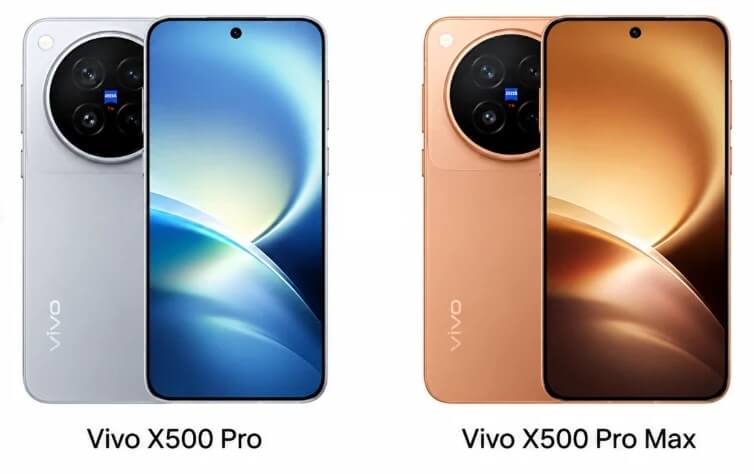
| Priority | X500 | X500 Pro | X500 Pro Max |
|---|---|---|---|
| Display size | 6.59 inches | 6.36 inches | 6.85 inches |
| Processing | Dimensity 9600M | Dimensity 9600 Pro | Dimensity 9600 Pro |
| Battery consideration | 7,500mAh listed for cited version | 6,510mAh or 5,300mAh | 6,750mAh EU; 7,800mAh global; 8,000mAh China |
| Camera appeal | Less advanced camera and video hardware | LOFIC primary camera and capable native zoom | Shared LOFIC primary sensor, plus a larger 200MP telephoto sensor |
| Best buyer | Someone happy to accept a larger body for a lower price | Someone prioritizing compact handling | Someone prioritizing zoom and endurance |
Comparison sources include standard X500 specifications and independent Pro testing. Verify local specifications before ordering; listed capacity does not establish identical regional availability or tested endurance.
I would choose compact Pro for its size and camera balance. Paying extra simply for a Pro label would miss its purpose.
Chinese Imports: Check Networks Before Chasing Savings
Published specifications list important European bands on Chinese X500 Pro. Claims that every Chinese vivo lacks European coverage bands do not fit this particular listing.
Chinese and international specifications still differ across several North American bands. Consult separate regional network-band lists rather than relying on “global ROM” sales language.
Band support does not establish carrier approval, VoLTE provisioning or Wi-Fi calling.
Before importing, request an exact model number, ask your carrier about voice-service compatibility and read warranty and return terms.
I would rather pay a reasonable local premium than save money on a phone whose calling features remain uncertain.
vivo X500 Pro Price: Regional Offers and Buying Advice
X500 Pro pricing varies across countries, configurations and sellers. Reported European offers for the 12GB RAM / 256GB storage version start around €1,299 in Spain, compared against roughly €1,399 in Italy. UK listings cover third-party imports, so check delivery costs, taxes and warranty before comparing them against local retail offers.
Russia and China entries below show reported launch starting prices rather than confirmed current deals. Turkey’s entry covers X500 Pro Max, not compact Pro, and appears separately for buyers considering that alternative.
| Market | Model | RAM / storage | Reported price | Pricing context |
|---|---|---|---|---|
| Germany | X500 Pro | 12GB / 256GB | €1,326–€1,399 | Collected retailer and price-comparison offers. |
| Italy | X500 Pro | 12GB / 256GB | €1,399–€1,399.90 | Reported standard retail pricing. |
| Spain | X500 Pro | 12GB / 256GB | From around €1,299 | Reported promotional price against a €1,399 list price. |
| Hungary | X500 Pro | 12GB / 256GB | From 499,990 Ft | Price collected from an Árukereső listing. |
| Russia | X500 Pro | 12GB / 256GB | From 102,995 ₽ | Reported starting price at the October 2026 Russian launch. |
| UK | X500 Pro | Varies across listings | Approximately £732–£899 | Reported third-party import offers across configurations and regional versions; not confirmed official UK retail pricing. |
| China | X500 Pro | Base configuration; confirm RAM and storage | From CNY 6,499 | Reported launch starting price, not a verified current retail offer. |
| Turkey | X500 Pro Max | 12GB / 256GB | 115,199–129,999 TL | Reported offers for the larger Pro Max. Not directly comparable against compact Pro pricing. |
Prices reflect research collected for this article and have not all been independently verified. No currency conversions have been applied. Launch prices, promotional offers and import listings describe different purchasing conditions. Confirm stock, configuration, regional hardware, taxes, delivery charges and warranty before ordering.
Which Offer Gives You Better Value?
My starting point would be matching hardware, not finding the smallest number. Compare identical RAM and storage first, then check battery capacity, regional software and warranty coverage.
Spain’s reported €1,299 offer deserves consideration against Italian pricing near €1,399. That saving matters less if delivery charges, missing accessories or awkward warranty arrangements erase the difference.
For this phone, I would check battery capacity before choosing a seller. A 5,300mAh unit needs a different value judgment from a 6,510mAh version, especially when published endurance results cover the larger battery.
Regional battery differences deserve attention when comparing alternatives, too. My Oppo Find X10 review examines its European version, published battery tests and camera trade-offs before weighing the price.
Are UK or Chinese Imports Worth Considering?
UK import listings and Chinese launch pricing can look attractive beside European retail prices, but those figures do not establish an equivalent final purchase cost.
Before importing, ask the seller to confirm the exact model number, installed software, network compatibility, warranty provider and return address. Check whether the advertised total includes applicable taxes and delivery charges.
I would accept a reasonable local premium for straightforward returns and dependable warranty service. A cheaper listing needs enough savings to justify any extra complications.
Does X500 Pro Cost More Than iPhone 18 Pro?
That depends on country, storage, retailer and promotion. These collected vivo prices alone cannot establish which phone costs less.
Compare both phones at matching storage capacities and include any charger or delivery costs. Then decide whether compact handling, camera output and your preferred software justify the difference.
My view: X500 Pro deserves consideration at a competitive local price, especially as a 6,510mAh package. At full flagship pricing, I would compare the exact offer against iPhone, Oppo and vivo’s larger Pro Max before paying.
Not every upgrade needs flagship pricing. If advanced telephoto photography and high-frame-rate video are not priorities, my vivo V80 review considers a different spending category for readers replacing an older vivo phone.
Final Verdict: Worth Buying for Its Size, Not Its Badge
X500 Pro earns attention through balance: compact dimensions, a bright display, capable speakers, strong native-focal-length photography and flexible video tools.
Its 6,510mAh version adds excellent measured endurance. Selected European versions lose capacity, though, and lack equivalent verified runtime results.
My recommendation is positive for buyers who value smaller phones and rarely depend on long digital zoom. A good local deal strengthens that recommendation.
Choose Pro Max for distant photography. Consider standard X500 if a larger body feels acceptable and pricing saves enough money.
Choose Pro Max for distant photography. Consider standard X500 if you prefer a lower price and do not mind a larger body. Compare dedicated gaming phones if sustained high frame rates are your top priority.
Before purchasing, confirm battery capacity, model number, warranty and charger bundle. Compare sample photos at your preferred focal lengths. Those checks will tell you whether X500 Pro suits your habits better than any flagship label.