Table of Contents
TL;DR
The best smartphone apps for 2026 in this article are ChatGPT, Notion, and Google Lens. ChatGPT helps with writing and quick thinking, Notion keeps notes and plans organized, and Google Lens solves fast real-world tasks through the camera.
Introduction
If your phone feels packed with apps that look useful but never earn a spot on your home screen, this list should help. I tested a mix of AI, productivity, and daily-use apps, then looked at current app trends and expert roundups to see which tools deserve attention in 2026.
Why these apps stood out
The strongest apps share a few traits: they save time, feel easy after day one, and keep pulling you back because they solve a real problem. Current 2026 app coverage points to AI assistants, productivity tools, creator apps, and utility apps as the biggest categories people keep installing.
How I judged them
I focused on three things: useful features, daily habit value, and how fast each app became part of a normal phone routine. During testing, the apps that stayed were the ones that cut down taps, removed friction, and did not feel like chores.
1. ChatGPT
ChatGPT remains a top pick because it works like a pocket assistant for writing, ideas, summaries, and quick problem-solving. In recent 2026 app roundups, it keeps showing up near the top for productivity and AI use.
Why phone fans keep it installed
ChatGPT helps with drafting messages, rewriting rough text, brainstorming post ideas, and explaining topics fast. The real value is not raw novelty; it is how many small tasks it replaces in a day.
Testing notes
During testing, this was the app I opened when I wanted to speed up a rough note or turn a messy idea into plain text. The best part is how often it replaces three or four smaller steps with one prompt.
I also noticed that the app feels most useful when the request is short and direct. If you treat it like a quick helper, it shines. If you expect it to think for you without clear input, the result feels weaker.
Why it beats similar tools?
A lot of AI apps want to be all things at once. ChatGPT wins because the core job is simple: ask, get help, move on. That makes it easier to trust during busy moments, which is a big reason users keep returning.
2. Notion
Notion earns a place because it combines notes, task lists, databases, and planning in one app. Recent app lists still treat it as a serious productivity choice for people who want structure without juggling several apps.
Why it sticks
The strongest part of Notion is flexibility. A student, reviewer, creator, or editor can all use the same app in very different ways, which is rare in mobile software.
Testing notes
The setup can feel heavy at first, but once a workspace is ready, the app settles into a clean routine. In testing, the people who kept using it were the ones who started simple and did not turn every page into a giant project.
I have seen this pattern again and again: the apps that stick usually reward small habits. A quick note after a meeting. A shopping list. A trip checklist. Small wins matter more than giant templates.
Why it beats similar tools?
Many note apps are either too bare or too busy. Notion sits in the middle well enough for people who want order without giving up flexibility. That balance is a big reason it stays relevant in 2026.
3. Google Lens
Google Lens stands out because it turns the camera into a search tool. Current app roundups still place it among the most useful mobile apps for daily life, mainly for translation, object recognition, and visual search.
Why it matters on a phone
This is the kind of app people forget about until a menu needs translation, a product needs identifying, or a poster needs a quick lookup. That instant camera-to-information flow is what keeps it useful after the first week.
Testing notes
Google Lens felt less flashy than the other two, yet it became one of the easiest apps to keep around. It solves tiny problems fast, and that kind of habit is hard to replace.
One test stood out: a tiny printed label I could barely read in a shop. I pointed the camera, got the text, and moved on. No drama, no extra steps, no setup screens.
Why it beats similar tools?
Search apps can feel cluttered, and camera apps can feel gimmicky. Lens avoids both traps. It is useful because it acts like a shortcut, not a toy.
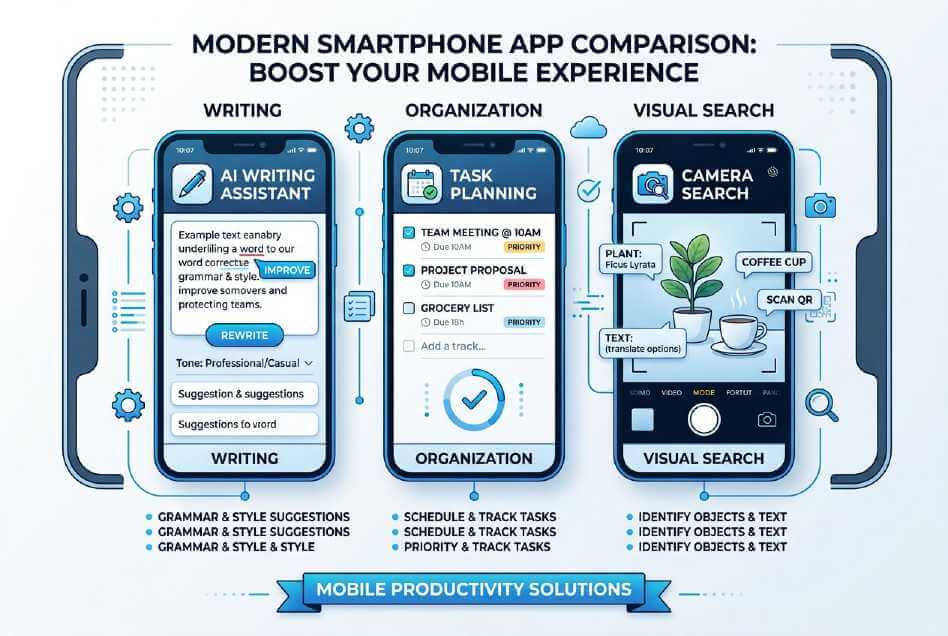
Quick comparison
| App | Best use | Why it stays installed |
|---|---|---|
| ChatGPT | Writing, research help, brainstorming | Cuts down small tasks and speeds up thinking |
| Notion | Notes, planning, project control | One workspace for many jobs |
| Google Lens | Camera-based search, translation, identification | Solves real-life problems fast |
Why users keep these apps
The apps that last on a phone usually do three things well: they save time, feel dependable, and fit into daily habits without a fight. AI apps like ChatGPT and structured tools like Notion fit that pattern well, and utility apps like Google Lens stay useful because they solve quick, real problems.
If you want to go beyond app reviews and learn how AI tools, product systems, and digital workflows are really evolving, it helps to attend conferences and meetups where builders, designers, and product teams share hands-on lessons. That kind of event is useful for smartphone fans, app reviewers, developers, and anyone who wants to understand how new tools get made and why some ideas stick. If you want a practical starting point, explore the Future Product Days for talks, sessions, and real-world product insights.
A simple pattern I kept seeing
The apps that survive are not always the fanciest. They are the ones that answer a repeated question: “Can this save me a few minutes every day?” If the answer is yes, the app stays.
What stuck most during testing
The strongest apps were the ones that became invisible in a good way. I did not think about the app itself. I thought about the task it solved, then moved on.
That may be the best sign of a great smartphone app in 2026. If the app fades into the background and still helps every day, it has done its job.

FAQ
Q1: Which app is best for everyday use?
ChatGPT is the easiest pick for everyday use if you want quick writing help, summaries, and idea support.
Q2: Which app is best for organizing life?
Notion is the strongest choice for notes, task lists, planning, and light project work.
Q3: Which app is best for quick real-world tasks?
Google Lens is the best pick for camera-based search, translation, and identifying objects or text fast.
Q4: Are these apps free?
All three offer free access in some form, and that is a big reason they stay popular in 2026 app roundups.
Q5: Why do these apps stay on phones?
They solve small, repeated problems without much setup. That kind of usefulness is what keeps people returning to them.
Q6: Can I use ChatGPT and Notion together?
Yes. Many users combine them for drafting, planning, and saving notes or workflows, and tutorials about linking ChatGPT and Notion have become common in 2026.
Q7: Which app should I install first?
Start with ChatGPT if you want the broadest daily help, then add Notion if you need structure, then Google Lens for fast camera-based searches.
Best smartphone Apps for 2026: Conclusion
For 2026, my top three picks for the best smartphone apps for 2026 are ChatGPT, Notion, and Google Lens. ChatGPT handles thinking and writing, Notion handles planning, and Google Lens handles quick real-world tasks.
If you want a small app stack that feels smart without getting bloated, start with these three and remove the rest that never earn attention.