Table of Contents
TL;DR: HyperOS 3 vs HyperOS 3.1
- ⚡ Super OTA updates — up to 2x faster installs with minimal or no reboots
- 🎯 Smoother performance — faster app launches and improved multitasking
- 🔋 Better battery life — lower idle drain and up to +1 hour screen time
- 📱 Super Island upgrades — live notifications with growing third-party support
- 🖼️ Rebuilt apps — faster Gallery, improved Weather, new Password Manager
- 🎨 Refined UI & animations — less stutter, more fluid transitions
- 🔒 Privacy improvements — shake-to-deny permissions and hidden patterns
- 🔗 Stronger ecosystem features — improved cross-device and accessory support
- ⚠️ Still evolving — limited app support, no full ecosystem sync yet
- ✅ Worth updating? Yes — especially for flagship Xiaomi devices
HyperOS 3.1 promises faster updates and better battery life—but does it actually deliver in real-world use?
Introduction: HyperOS 3 vs HyperOS 3.1 Explained
With the release of HyperOS 3.1, Xiaomi continues to push its unified ecosystem vision forward. But how much has actually changed compared to HyperOS 3?
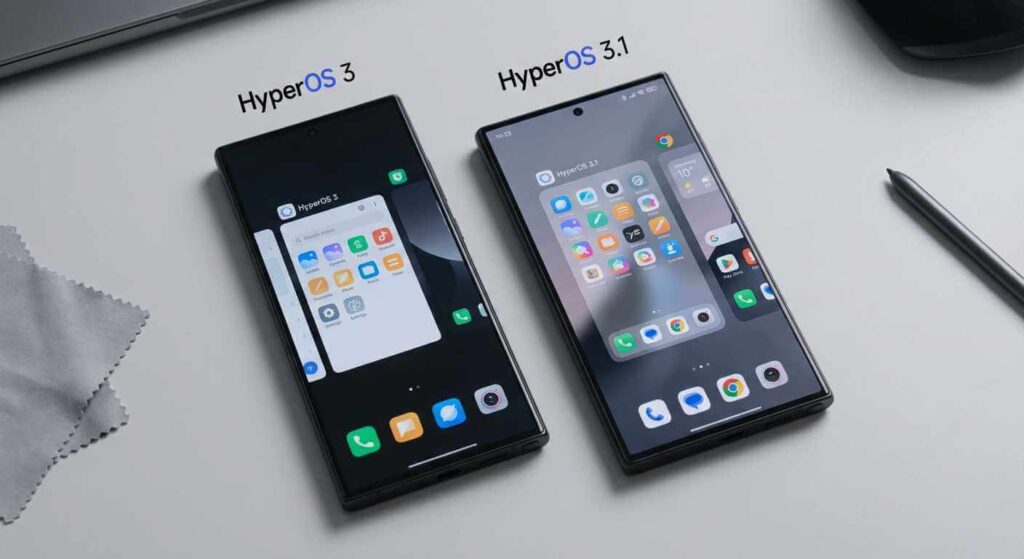
After using both HyperOS 3 and HyperOS 3.1 daily for over two weeks on a Xiaomi 14—including heavy multitasking, camera usage, and gaming—the differences become clear.
Watch HyperOS 3 vs HyperOS 3.1 Comparison
Prefer a visual breakdown? Watch this hands-on comparison of HyperOS 3 vs HyperOS 3.1:
In this guide, we break down:
- Key differences between HyperOS 3 and 3.1
- Real-world performance improvements
- New features and hidden upgrades
- Whether you should install the update
HyperOS 3 vs HyperOS 3.1: Key Differences at a Glance
| Feature | HyperOS 3 | HyperOS 3.1 |
|---|---|---|
| Update System | Traditional OTA | Super OTA (faster, fewer reboots) |
| UI & Animations | Smooth | More fluid, reduced stutter |
| App Performance | Good | Optimized, faster loading |
| Battery Life | Stable | Improved efficiency (+30–60 min SOT) |
| Multitasking | Standard | Enhanced, iOS-like transitions |
| Ecosystem | Limited | Better cross-device integration |
Super OTA: Faster Updates, Less Downtime
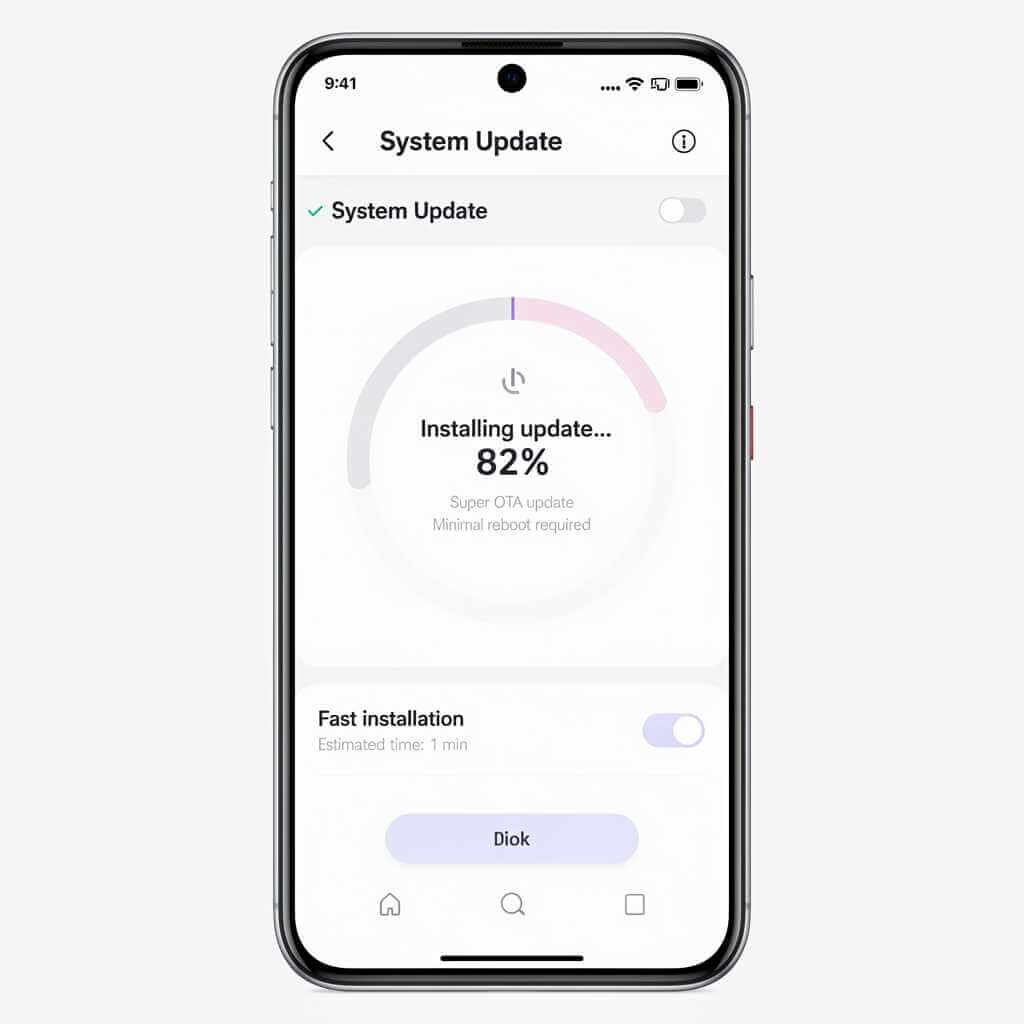
One of the biggest upgrades in HyperOS 3.1 is the introduction of Super OTA.
What’s improved:
- Up to 50% faster update installation
- Minimal or no reboot required
- Smaller incremental update packages
- Better background installation handling
Real-world impact:
In testing, updates that previously took 15–25 minutes now complete in under 10 minutes, often without interrupting usage. I installed multiple updates while streaming video and browsing, and HyperOS 3.1 handled background updates noticeably better with fewer interruptions.
👉 This is a major quality-of-life improvement, especially for users who update frequently.
Super Island Upgrades: Smarter, More Useful Notifications
HyperOS 3 introduced Xiaomi’s version of dynamic notifications. HyperOS 3.1 takes it further.
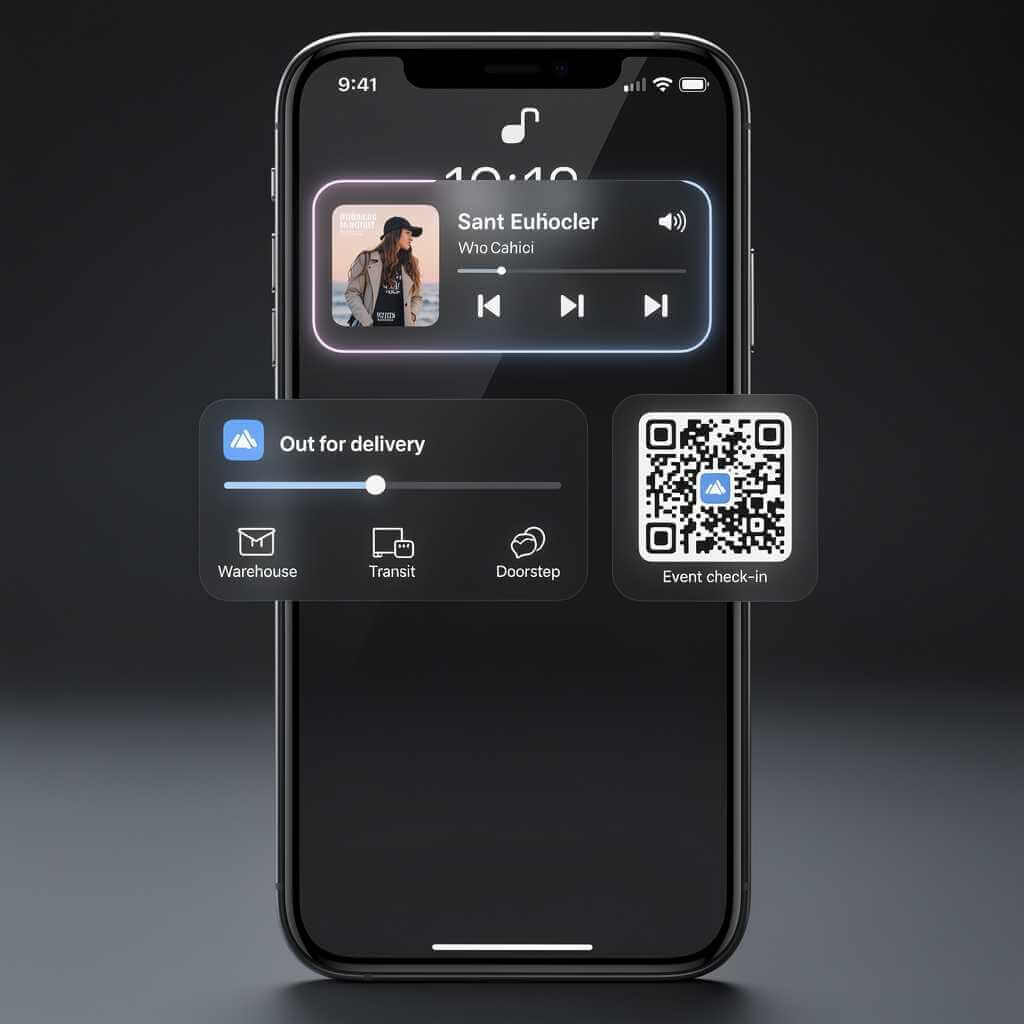
What’s new:
- Support for third-party apps via Android 16 APIs
- Real-time progress updates (music, deliveries)
- Quick access elements like QR codes and tasks
- Improved lock screen interaction
The limitation:
- Adoption depends on developers
- Some apps still don’t support it fully
👉 When supported, it significantly improves daily usability.
App Improvements: Gallery, Weather & Password Manager
Gallery App
- Completely rewritten
- Smoother scrolling on large libraries
- Faster editing and loading times
Weather App
- Cleaner UI
- Real-time radar integration
- Faster refresh rates
New Password Manager
- Centralized credential storage
- Passkey and autofill support
- Security checks for compromised passwords
Missing feature:
- No full cross-device sync yet
👉 These changes make the system feel more modern and cohesive.
UI & Animations: Noticeably Smoother Experience
HyperOS 3.1 focuses heavily on fluidity.
Improvements include:
- Faster app switching
- Smoother gesture navigation
- Reduced animation stutter
- Improved multitasking transitions
New addition:
- Motion sickness mode (reduces visual effects)
👉 Flagship devices benefit the most, while mid-range phones see moderate gains.
The difference is especially noticeable when quickly switching between apps, where animations feel more fluid and responsive in real-world use.
Performance & Battery Life: Real Gains in Daily Use
How to Improve Battery Life on Xiaomi Phone: A Comprehensive Guide
Performance improvements:
- Faster app launch times (~0.5s vs 0.8s)
- Better RAM management (fewer app reloads)
- Reduced background process kills
During daily use—including switching between social apps, camera, and gaming—apps stayed in memory longer, and reloads were noticeably reduced compared to HyperOS 3. On average, I consistently gained around 30–45 minutes of additional screen-on time during moderate to heavy usage.
Battery improvements:
- Lower idle drain
- +30 to 60 minutes additional screen time (average use)
👉 Not revolutionary, but consistently noticeable in daily usage.
How to Save Battery on OLED Screens by Turning Everything Black (The OLED Black Background Method)
Real-World Experience After 2 Weeks
After using HyperOS 3.1 as a daily driver for over two weeks, the improvements are not just noticeable—they’re consistent.
The biggest difference comes from smoother multitasking, fewer app reloads, and faster system responsiveness. While individual upgrades may seem small, together they create a significantly more polished experience compared to HyperOS 3.
Privacy & Security Enhancements
HyperOS 3.1 introduces several subtle but useful privacy features:
- Shake-to-deny permissions
- Hidden unlock patterns
- Improved fingerprint settings
- Better control over app permissions
Still missing:
- Detailed privacy audit logs
👉 A step forward, but still behind competitors in transparency tools.
Ecosystem Improvements: Better Cross-Device Integration
HyperOS 3.1 expands Xiaomi’s ecosystem capabilities:
New features:
- Improved AirPods compatibility
- Call handling across devices (limited support)
- Better tablet-phone interaction
Limitations:
- No full file drag-and-drop continuity
- Ecosystem still behind Samsung and Apple
HyperOS 3.1 Hidden Features You Might Miss
- Motion sickness reduction mode
- Faster gesture response tuning
- Improved background update handling
- Refined lock screen interactions
👉 These smaller upgrades collectively improve the overall experience.
Eligible Devices & Rollout Timeline (2026)
HyperOS 3.1 rollout began in early 2026 and is expanding globally.
Expected rollout:
- Flagships (Xiaomi 15, 14, 13 series): First wave
- Mid-range (Redmi Note series): March–April 2026
- Budget devices: April–May 2026
- Tablets & POCO devices: Gradual rollout
👉 Availability depends on region and device compatibility.
Pros and Cons of HyperOS 3.1
✅ Pros
- Faster OTA updates (Super OTA)
- Improved performance and smoothness
- Better battery efficiency
- Enhanced multitasking
- Useful app redesigns
❌ Cons
- Limited third-party feature support
- Slow rollout in some regions
- Ecosystem still evolving
- Missing advanced privacy tools
Should You Update to HyperOS 3.1?
✔ Upgrade if you:
- Use a flagship Xiaomi device
- Want smoother performance
- Care about faster updates and better battery
⚠️ Consider waiting if:
- You use a mid-range or budget device
- Stability is more important than new features
- Update isn’t widely available in your region yet
👉 Overall: Yes, it’s worth updating for most users.
FAQ: HyperOS 3 vs HyperOS 3.1
Q1: Is HyperOS 3.1 worth updating in 2026?
Yes. It offers noticeable improvements in speed, battery life, and system smoothness.
Q2: What is Super OTA in HyperOS 3.1?
A new update system that reduces installation time and minimizes reboots.
Q3: Which devices will get HyperOS 3.1?
Most Xiaomi 13, 14, and 15 series devices, along with newer Redmi and POCO models.
Q4: Does HyperOS 3.1 improve battery life?
Yes, users can expect moderate improvements in efficiency and screen-on time.
Q5: Are there any major bugs?
The system is stable overall, though some devices may experience aggressive background app management.
HyperOS 3.1 vs Competitors: How It Compares
While HyperOS 3.1 brings meaningful improvements, it’s important to see how it stacks up against other major Android skins like Samsung One UI and OxygenOS.
Performance & Smoothness
- HyperOS 3.1: Faster animations, improved multitasking, and better RAM management
- Samsung One UI: Highly optimized but slightly heavier on mid-range devices
- OxygenOS: Known for speed, but recent versions feel less distinct
👉 Verdict: HyperOS 3.1 is now on par with OxygenOS and slightly lighter than One UI on flagship devices.
Update System (OTA Experience)
- HyperOS 3.1: Super OTA enables faster installs with minimal reboots
- Samsung One UI: Reliable but still relies on traditional OTA updates
- OxygenOS: Stable updates, but not as fast as Xiaomi’s new system
👉 Verdict: HyperOS 3.1 leads here with its Super OTA advantage.
UI Design & Features
- HyperOS 3.1: Clean visuals, improved animations, evolving “Super Island”
- Samsung One UI: Feature-rich, highly customizable, polished ecosystem
- OxygenOS: Minimalist design but fewer standout features
👉 Verdict: One UI still leads in customization, but HyperOS is catching up fast in usability.
Ecosystem Integration
- HyperOS 3.1: Improving cross-device features, better accessory support
- Samsung One UI: Strong ecosystem (phones, tablets, wearables, PCs)
- OxygenOS: Limited ecosystem compared to Samsung and Xiaomi
👉 Verdict: Samsung remains the leader, but Xiaomi is clearly expanding its ecosystem strategy.
Battery & Efficiency
- HyperOS 3.1: Improved idle drain and better background optimization
- Samsung One UI: Good battery management, slightly heavier system load
- OxygenOS: Balanced performance and efficiency
👉 Verdict: HyperOS 3.1 shows strong efficiency gains, especially on newer devices.
Final Comparison Verdict
HyperOS 3.1 is no longer just catching up—it’s becoming a serious competitor.
- ✅ Best for speed & update efficiency: HyperOS 3.1
- ✅ Best for ecosystem & features: Samsung One UI
- ✅ Best balance of simplicity & speed: OxygenOS
👉 Overall, HyperOS 3.1 positions Xiaomi as a stronger contender in the Android ecosystem, especially for users who value performance and fast updates.
Final Verdict: A Polished Upgrade Worth Installing
HyperOS 3.1 is a refinement-focused update, not a complete overhaul—but that’s exactly what makes it valuable.
With:
- Faster updates
- Smoother UI
- Better battery life
- Improved apps
…it delivers a more polished and reliable experience.
After extended daily use, these improvements add up to a noticeably smoother and more reliable experience.
👉 If your device supports it, HyperOS 3.1 is a recommended upgrade.
💬 Share Your Experience with HyperOS 3.1
🔎 Have you received the HyperOS 3.1 update on your Xiaomi device?
Share your experience in the comments—especially if you’ve noticed performance or battery improvements.
📱 Still waiting? Check if your device is eligible and keep an eye on upcoming rollout updates.