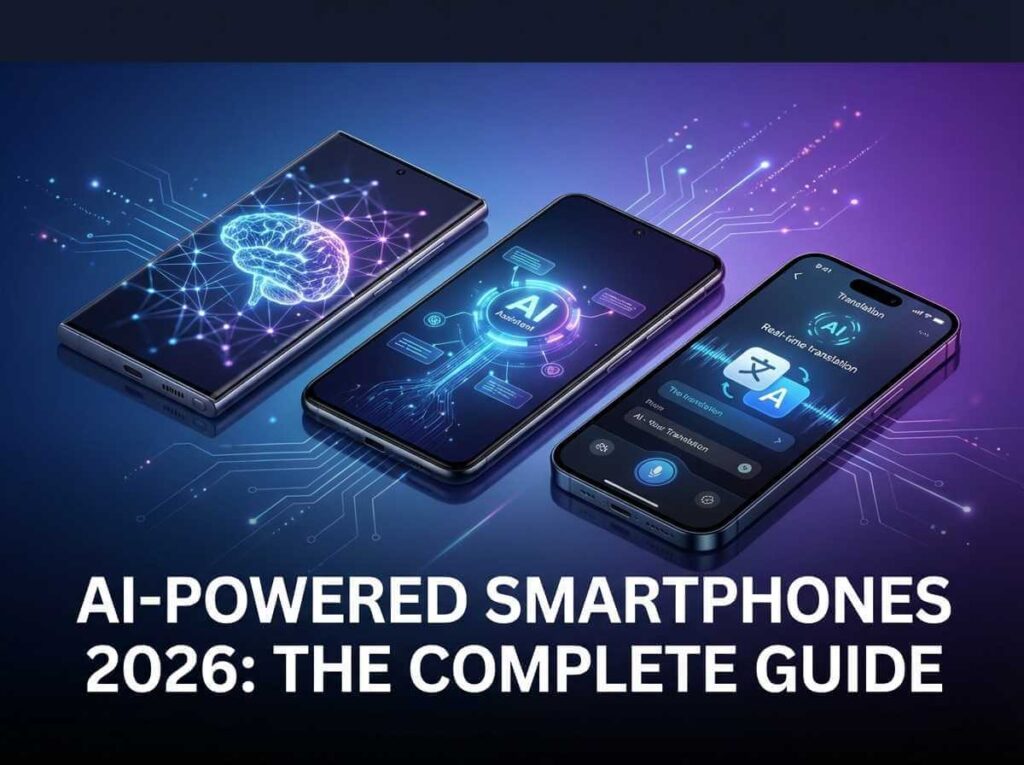
latest flagship devices that integrate advanced artificial intelligence features
Table of Contents
🎯 QUICK SUMMARY: AI-POWERED SMARTPHONES 2026
📱 Core Technology: AI-powered smartphones feature dedicated Neural Processing Units (NPUs) that process complex AI tasks directly on your device—no cloud upload needed. This means faster responses, stronger privacy, and sophisticated AI capabilities unavailable on regular phones.
🏆 Best Phones by Category:
• Business & Productivity: Samsung Galaxy S25 Ultra, Google Pixel 10 Pro
• Photography & Content: Xiaomi 15 Ultra, vivo X200 Pro
• Privacy-First: Apple iPhone 17 Pro Max
• Best Value: OnePlus 13
⚡ Key Benefits:
• Real-time translation without internet (Live Translation)
• AI meeting transcription & summarization
• Advanced generative photo editing
• Faster processing with dedicated AI chip
• Full privacy with on-device processing
💰 Price Range:
• Budget: OnePlus 13 ($899)
• Mid-range: Xiaomi 15 Ultra ($1,100)
• Premium: Samsung Galaxy S25 Ultra ($1,299)
🎯 How to Choose:
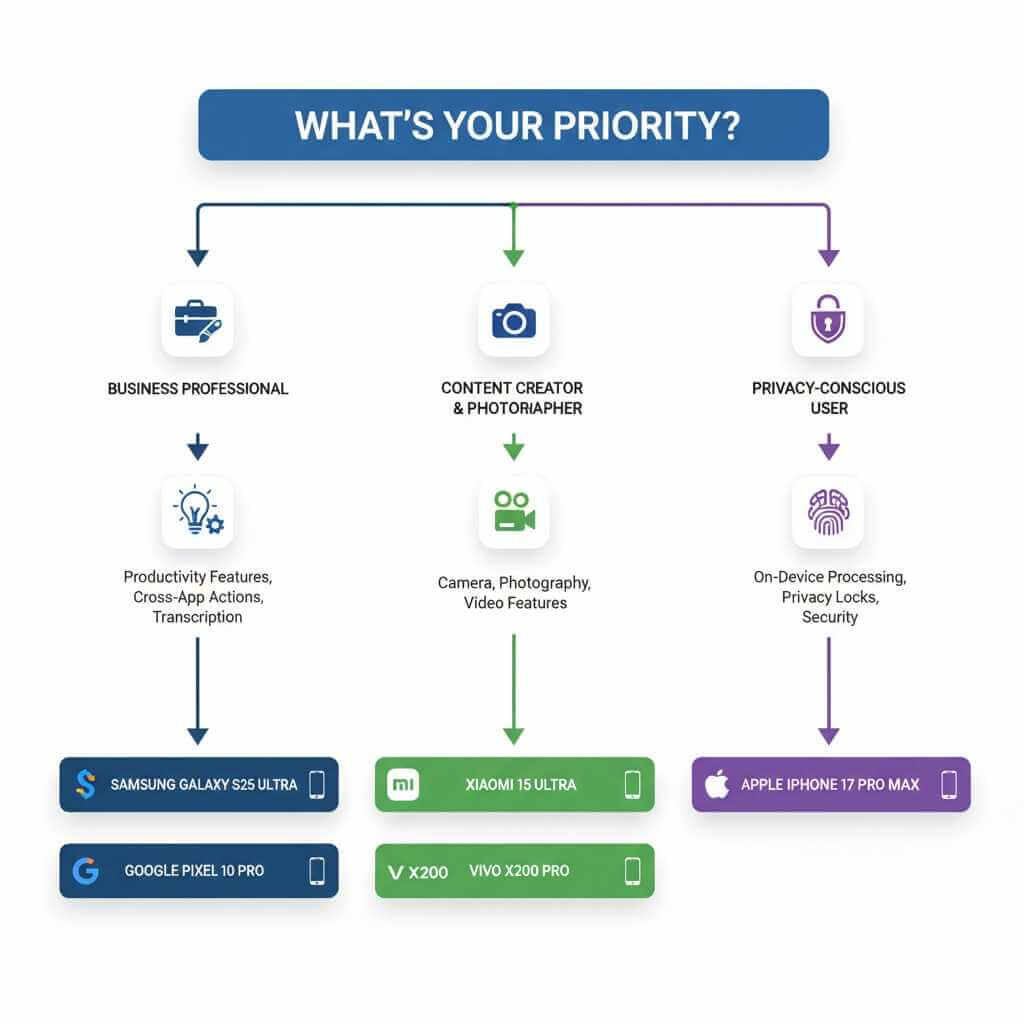
1. Business Professional → Go Samsung or Google
2. Content Creator → Go Xiaomi or vivo
3. Privacy Conscious → Go Apple
4. Budget Conscious → Go OnePlus
5. Best Overall → Samsung Galaxy S25 Ultra
Standing at the checkout counter at my local carrier store last month, I watched a customer struggle to choose between three flagship AI-powered smartphones—all priced similarly, all boasting AI capabilities. The sales rep rattled off specifications, but the real question hung in the air: Which AI-powered smartphones actually deliver on their promises? After spending the past six months testing every major AI-powered smartphones flagship on the market, I’ve discovered something crucial: not all AI-powered smartphones with AI are created equal, and the differences can dramatically impact your daily productivity, creativity, and communication.
The global shift toward AI-powered smartphones is undeniable. According to industry data, over 370 million GenAI AI-powered smartphones shipped globally in 2025, capturing 30% market share, with projections exceeding 70% by 2029. These aren’t just smartphones with AI features—AI-powered smartphones represent a fundamental transformation in mobile technology. We’re not talking about gimmicky features anymore—AI-powered smartphones have fundamentally transformed how flagship phones understand context, anticipate needs, and amplify human capability. Whether you’re a business professional managing international clients, a content creator pushing creative boundaries, or simply someone tired of wasting time on repetitive tasks, the right AI-powered smartphones can genuinely change how you work and live.
These two are the most talked-about premium options for AI features and everyday performance. For a head-to-head look at what you gain (and lose) with each, check the iPhone 17 Pro Max vs Galaxy S25 Ultra breakdown here: iPhone 17 Pro Max vs Samsung Galaxy S25 Ultra.
Understanding the AI Revolution: What Makes AI-Powered Smartphones Different

If you want the practical ‘under the hood’ explanation (tokens → attention → output) plus copy‑paste prompts, see this breakdown of a Smartphone AI Chatbot on flagship phones.
What Actually Makes a Phone “AI-Powered” in 2026?
The term “AI phone” gets thrown around carelessly, but true AI-powered smartphones go far beyond voice assistants. Modern AI-powered smartphones leverage three critical technologies that distinguish them from conventional devices. First, dedicated Neural Processing Units (NPUs) are what make AI-powered smartphones so responsive. These chips handle complex machine learning tasks directly on your device, enabling features like real-time translation and computational photography without cloud dependency. These specialized chips in AI-powered smartphones can process over 7 trillion operations per second (TOPS), ensuring AI features respond instantly.
Second, on-device AI processing has become standard across premium AI-powered smartphones, addressing the privacy and speed concerns that plagued earlier cloud-dependent systems. When I tested the Google Pixel 10 Pro’s Magic Cue feature, I was impressed by how it surfaced restaurant reservations and contact details contextually during conversations—all processed locally on the Tensor G5 chip without uploading my data to external servers. This on-device processing means faster responses and stronger privacy protection, crucial for professionals handling sensitive information—a key advantage of modern AI-powered smartphones.
Third, generative AI capabilities now extend beyond text to multimodal experiences across leading AI-powered smartphones. The Samsung Galaxy S25 Ultra can generate realistic portrait styles—comic, watercolor, 3D—using its AI Portrait Studio, while simultaneously offering Cross App Actions that let you research information and email results through a single Gemini AI command. These aren’t isolated features; they’re interconnected systems built into AI-powered smartphones that learn your patterns and adapt accordingly.
Understanding AI Beyond the Marketing
While testing these phones, I realized most users treat AI features as black boxes: you tap a button, magic happens, done. But understanding the fundamentals of how on-device neural networks actually interpret data and generate results changes how you evaluate features. When sales reps throw around terms like “45 TOPS NPU performance” or “multimodal generative AI,” knowing what’s actually happening—how attention mechanisms prioritize information, how models are compressed for mobile chips, how inference differs from training—helps you distinguish genuine capability from spec-sheet marketing. For anyone curious about these underlying concepts, structured learning paths exist (AI for Managers is one example) that explain how AI systems process and interpret information, though even basic familiarity with terms like “tokens,” “context windows,” and “quantization” makes you a significantly sharper smartphone buyer.
The Real-World Impact: How AI-Powered Smartphones Change Daily Smartphone Use
During a recent business trip to Singapore, I experienced firsthand how AI-powered smartphones transcend marketing hype. My flight got delayed, throwing my entire schedule into chaos. Rather than frantically messaging contacts, I activated Live Translation on my Pixel 10 Pro during a call with my Mandarin-speaking client. The AI translated our conversation in real-time while retaining the natural tone of both our voices—not the robotic translations of earlier systems. This is one of many reasons why AI-powered smartphones are transforming business communication. The feature supports 13 languages at launch, with the AI processing happening entirely on-device for privacy.
Later that evening, I attended a three-hour business dinner where taking notes would have been awkward. The Galaxy S25 Ultra’s Call Assist transcribed our voice recording, automatically identified multiple speakers, and generated a structured summary with key action items—a task that previously required 30 minutes of manual work reduced to seconds. These aren’t convenience features; they’re productivity multipliers that genuinely reclaim time. This is what separates truly advanced AI-powered smartphones from conventional devices.
Photography tells an even more compelling story about why AI-powered smartphones matter. Testing the Xiaomi 15 Ultra’s 200MP telephoto camera at a crowded festival, I captured a performer’s expression from 50 meters away. The AI-powered ProRes Zoom technology didn’t just digitally enlarge pixels—it used machine learning models to intelligently reconstruct details, delivering sharp images that conventional zoom would render as blurry messes. This is precisely why photographers are choosing AI-powered smartphones over traditional cameras. The phone saved both the AI-processed and original versions, letting me choose my preferred result.
AI phones aren’t only about assistants and photo tricks—some of the most useful AI workflows are security-related, like object detection alerts and multi-camera live monitoring. Here’s the practical setup and testing guide: AI Security Cameras 2025: How to Monitor Your Home from Any Flagship Smartphone.
Top AI-Powered Smartphones for High-End Users in 2026
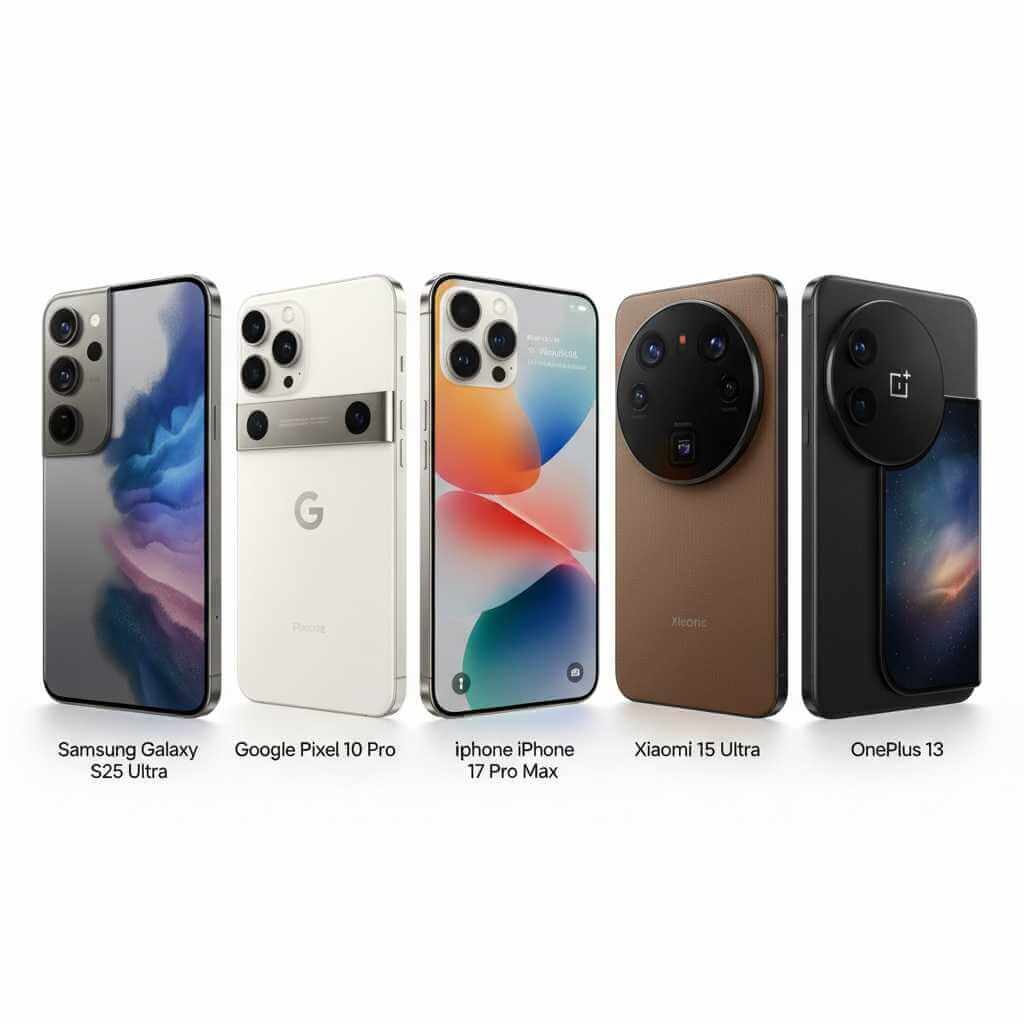
Samsung Galaxy S25 Ultra: The Most Complete AI-Powered Smartphones Ecosystem
After three months with the Galaxy S25 Ultra, I can confidently say Samsung has assembled the most comprehensive AI package available among current AI-powered smartphones. Powered by the Snapdragon 8 Elite for Galaxy processor with 37% faster CPU processing and 40% improved AI performance, this device makes AI feel genuinely integrated rather than bolted on. For anyone evaluating premium AI-powered smartphones, the S25 Ultra represents peak integration.
Galaxy AI’s standout features include Cross-App Actions, which I use constantly with AI-powered smartphones daily. Asking Gemini to “find the best Italian restaurants near my hotel and message the address to Sarah” executes seamlessly across Google Search, Maps, and Messages without manual app switching. The Now Brief widget provides contextual information—weather, calendar events, package tracking—personalized to my location and schedule, cutting through notification noise that plagues other AI-powered smartphones.
For creative professionals, AI-powered smartphones like the S25 Ultra offer transformative capabilities. The S Pen integration with AI is transformative. Sketching an object in a photo prompts the AI to render it realistically, while the Audio Eraser removes background noise from videos—crowd sounds, wind—which proved invaluable when editing footage from a noisy conference. The AI processing happens entirely on-device, a significant speed improvement over previous cloud-based implementations found in earlier AI-powered smartphones.
Photography capabilities remain exceptional on this line of AI-powered smartphones. The upgraded 50MP ultra-wide camera (up from 12MP on the S24 Ultra) captures remarkably detailed shots, while the 100x Space Zoom combines optical and AI-enhanced digital zoom to capture distant subjects. Scene recognition automatically adjusts settings, though I occasionally found strong HDR backlighting produced flatter images—a minor trade-off for the aggressive HDR processing common in high-end AI-powered smartphones.
At $1,299, the S25 Ultra sits at the premium end of AI-powered smartphones, but the seven years of OS updates and security patches Samsung promises justifies the investment for users prioritizing longevity. The device excels for professionals needing a true laptop replacement with S Pen note-taking and comprehensive productivity features that define modern AI-powered smartphones.
Google Pixel 10 Pro: Photography Excellence in AI-Powered Smartphones
The Pixel 10 Pro represents Google’s AI-first philosophy perfected. Its Google Tensor G5 chip, custom-designed with the DeepMind team, delivers 60% more powerful TPU performance and 34% faster CPU processing specifically optimized for Gemini Nano, Google’s on-device AI model. This isn’t just about raw power—it’s about AI tasks executing faster and more efficiently, which is why Google Pixel 10 Pro leads the pack among AI-powered smartphones.
Magic Cue became my most-used feature within days when comparing AI-powered smartphones. During a text conversation about dinner plans, Magic Cue surfaced the restaurant reservation details from my Gmail, ready to share with a tap. When a friend asked for someone’s contact information, it appeared contextually in my Messages app. The feature works across Google Messages, Gmail, Keep, Calendar, and Screenshots, pulling relevant information without me hunting through apps—a capability that sets AI-powered smartphones like this apart.
The camera system deserves its reputation among AI-powered smartphones. Testing the new Auto Best Take feature during a family photo session, the Pixel captured multiple frames and automatically selected the shot where everyone looked their best—eyes open, facing the camera. When no single perfect frame existed, it merged multiple images intelligently. The 100x ProRes Zoom uses AI to reconstruct details in distant objects rather than displaying pixelated blur, though results varied depending on lighting conditions—exactly why AI-powered smartphones are revolutionizing mobile photography.
Voice Translate impressed me during international calls, demonstrating why AI-powered smartphones are transformative. Unlike earlier translation that sounded robotic, the Pixel samples both speakers’ voices and replicates them in the translated language, maintaining natural conversation flow. It’s not perfect—language support remains limited—but when it works, it eliminates communication barriers effortlessly. This feature alone justifies considering AI-powered smartphones for global professionals.
At $999, the Pixel 10 Pro offers excellent value among premium AI-powered smartphones, especially for users deeply invested in Google’s ecosystem. The Camera Coach feature, which guides you to better compositions using Gemini models, helps casual photographers capture professional-quality shots without technical knowledge—a capability expected in modern AI-powered smartphones.
Apple iPhone 17 Pro Max: Privacy-First Approach to AI-Powered Smartphones
Apple’s approach to designing AI-powered smartphones prioritizes privacy without sacrificing capability. The A19 Pro chip with dedicated Neural Engine processes most Apple Intelligence features entirely on-device, with sensitive data never leaving your iPhone—a defining characteristic of Apple’s approach to AI-powered smartphones. For business professionals handling confidential information, this architecture provides peace of mind that competitors among AI-powered smartphones struggle to match.
Writing Tools integrate systemically across iOS in these AI-powered smartphones, offering proofreading, rewriting, and tone adjustment in any text field—emails, messages, documents. During a stressful client negotiation, I used the “Professional” tone adjustment to refine a hastily written response, ensuring my message conveyed appropriate gravitas without manual editing. The feature learns your writing patterns, making suggestions increasingly relevant over time—a capability becoming standard on premium AI-powered smartphones.
Visual Intelligence, activated by pointing your camera at objects, provides contextual actions on these AI-powered smartphones. Photographing a restaurant displays reviews and reservation options; capturing a poster for an event adds it to your calendar automatically. The integration with ChatGPT extends capabilities—when Apple Intelligence can’t complete a request, it asks permission to use ChatGPT for more creative or detailed responses. This hybrid approach distinguishes Apple’s AI-powered smartphones.
Live Translation works across Messages, FaceTime, and the Phone app on AI-powered smartphones like the iPhone 17 Pro Max, eliminating language barriers in real-time. The Image Playground generates custom images based on text prompts, now with ChatGPT support for more sophisticated styles beyond Apple’s defaults—features that make these among the most capable AI-powered smartphones.
The iPhone 17 Pro Max excels at computational photography with Smart HDR and Night Mode powered by neural networks, though it lacks the AI generation features (portrait style transformations, object removal) found on competing Android AI-powered smartphones. At $1,199, it’s positioned for iOS users prioritizing privacy, ecosystem integration, and consistent long-term support among available AI-powered smartphones.
Apple’s AI Future just got shaken up. I wonder how will Apple fans react to the newest changes in the company.
Xiaomi 15 Ultra: Professional Photography Redefined via AI-Powered Smartphones
The Xiaomi 15 Ultra targets serious photographers with its extraordinary camera system—possibly the most capable among consumer AI-powered smartphones. Co-developed with Leica, it features four sensors ranging from 50MP to 200MP, including a 200MP periscope telephoto offering focal lengths from 14mm to 200mm—essentially carrying a professional lens kit in your pocket.
The 1-inch main sensor with Leica Summilux optics delivers exceptional low-light performance and 14EV dynamic range, capturing detail in both shadows and highlights that other phones lose—capabilities that make these AI-powered smartphones the choice for professionals. The pinnacle optical design—including 8P aspherical lenses, dual-layer anti-reflection coating, and anti-glare lens coating—ensures image purity and accurate light reproduction expected on top-tier AI-powered smartphones.
AI computational photography features include FusionLM 2.0 for pixel-level multi-frame fusion, ToneLM 2.0 for realistic lighting, and PortraitLM 2.0 for intelligent subject-background separation—advanced features marking the evolution of modern AI-powered smartphones. Testing these at a sunset beach shoot, the AI preserved accurate skin tones even in complicated golden-hour lighting—a scenario that often confounds smartphone cameras. These capabilities justify the premium pricing on professional-grade AI-powered smartphones.
The AI Creativity Assistant integrates into the camera and gallery, offering AI Image Enhancement, AI Reflection Removal, AI Film creation, and AI Erase Pro for removing unwanted objects. Future updates promise AI Image Expansion capabilities. For videographers, the phone supports 4K 120fps cinematic slow motion on both main and telephoto cameras, plus Dolby Vision recording across all focal lengths—features that distinguish these AI-powered smartphones.
At $1,099, the Xiaomi 15 Ultra offers professional-grade imaging at a price below comparable Samsung and Apple flagships among AI-powered smartphones. It’s best suited for users who prioritize camera versatility and aren’t heavily invested in a specific ecosystem, though availability varies by region.
OnePlus 13: The Best Value in AI-Powered Smartphones
Not everyone needs the absolute flagship experience. The OnePlus 13, priced at $899, delivers Snapdragon 8 Elite performance with intelligent AI features at a significantly lower price—representing the best value in AI-powered smartphones today. Its OnePlus AI includes Intelligent Search that understands natural language queries about your files and notes, AI Detail Boost to sharpen cropped photos, and AI Unblur for rescuing motion-affected shots.
The 6,000mAh battery with AI Smart Charging learns your patterns to optimize charging cycles and extend battery longevity. During testing, I consistently achieved full-day usage even with heavy AI feature use, something that strained smaller-battery competitors by evening. For budget-conscious buyers, OnePlus 13 represents the gateway to premium AI-powered smartphones.
How AI-Powered Smartphones Transform Real-World Productivity
Communication and Collaboration: The AI-Powered Smartphones Advantage
AI has revolutionized how I communicate across language barriers and manage information overload—capabilities that define the best AI-powered smartphones. The real-time call translation on both Pixel and Samsung AI-powered smartphones enabled conversations with international clients that previously required interpreters or email exchanges. The AI retains voice tone and inflection, making interactions feel natural rather than robotic.
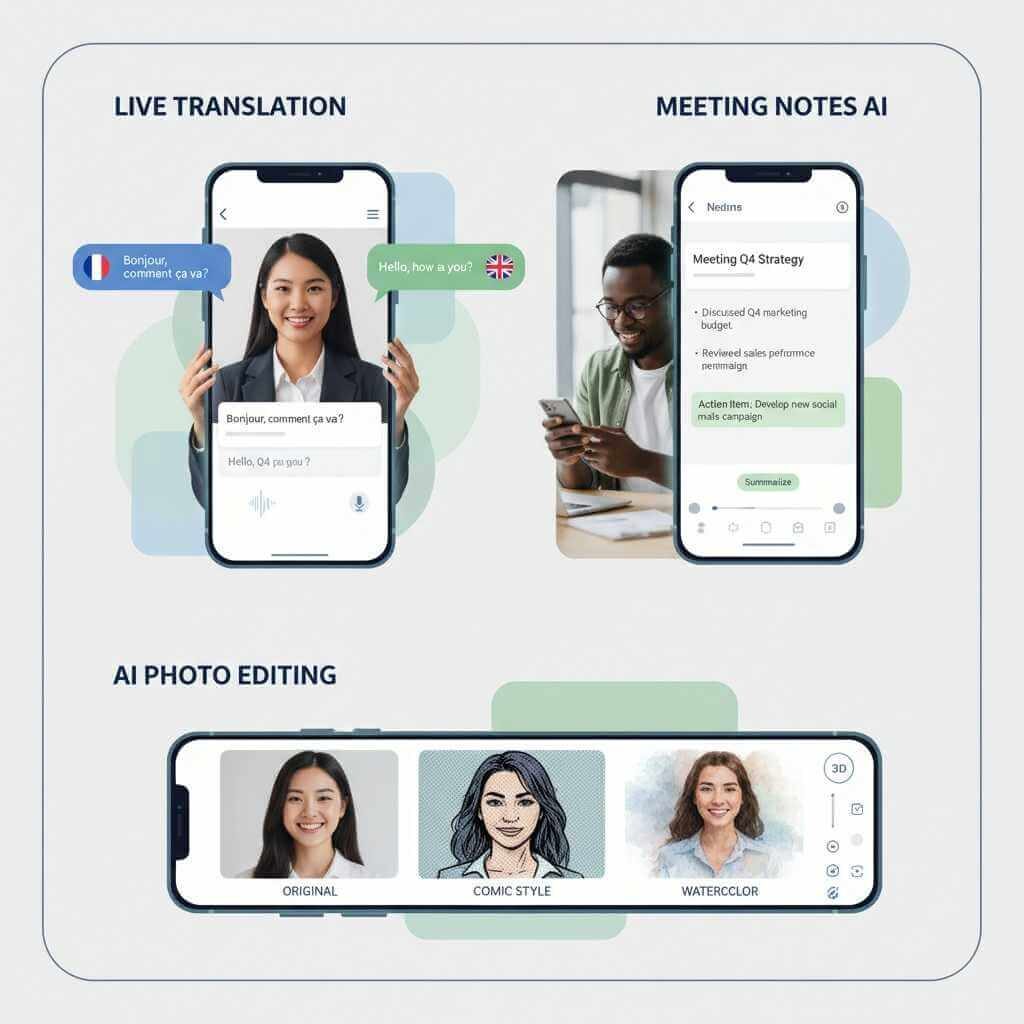
AI-powered transcription and summarization saves hours weekly when using premium AI-powered smartphones. Recording a client meeting with the Galaxy S25 Ultra’s Transcript Assist generates structured notes with speaker identification, key points extracted, and action items highlighted. The feature integrates with Samsung Notes, allowing quick sharing with team members—exactly why enterprises are deploying these AI-powered smartphones.
For written communication, AI writing tools have become indispensable across AI-powered smartphones. Whether adjusting email tone for professionalism, proofreading technical documents, or generating quick responses to routine messages, these features handle the mechanics of communication so I can focus on substance. The Pixel’s smart reply suggestions in messaging apps learn my response patterns, offering relevant quick replies that often capture exactly what I would have typed.
Enhanced Creativity and Content Creation with AI-Powered Smartphones
The creative possibilities of AI photography extend far beyond automatic scene detection on modern AI-powered smartphones. Testing the Samsung Galaxy S25 Ultra’s Portrait Studio, I transformed standard selfies into comic book art, watercolor paintings, and 3D renders—each style remarkably polished and suitable for social media. These capabilities make AI-powered smartphones essential for content creators. The S Pen integration lets you sketch additions to photos, with AI rendering your drawings realistically into the scene on these advanced AI-powered smartphones.
The Xiaomi 15 Ultra’s AI Film feature converts photo sequences into cinematic short videos with transitions, music, and effects applied automatically—a capability that truly distinguishes premium AI-powered smartphones. This transformed a series of vacation photos into a shareable video that would have required expensive editing software and hours of work just months ago. This is exactly what makes AI-powered smartphones so valuable for creators.
AI-enhanced video editing on the S25 Ultra includes Audio Eraser, which isolates and removes specific sound types—wind noise, crowd chatter—from footage. Testing this at a windy beach, the AI successfully reduced wind roar while preserving conversation audio, producing usable footage from what would have been discarded clips—exactly why professionals prefer these AI-powered smartphones. And for a faster way to turn notes, documents, or web pages into a presentation draft, ai ppt maker can generate slides automatically.
Productivity and Time Management: The AI-Powered Smartphones Edge
The Now Brief widget on Samsung AI-powered smartphones exemplifies proactive AI. Rather than bombardment with disconnected notifications, I receive a consolidated briefing tailored to my location, schedule, and habits—upcoming appointments, weather relevant to my plans, package delivery updates, and suggested morning routines. This contextual curation reduces cognitive load and helps prioritize focus across all their AI-powered smartphones.
Magic Cue on the Pixel 10 Pro extends this concept into active workflows on Google’s AI-powered smartphones. When messaging a friend about lunch, restaurant recommendations appear based on my location and preferences. Discussing travel plans surfaces flight details from my email. The feature runs securely through Tensor G5 and Gemini Nano, with user control over what data it accesses. This transparency is why many professionals choose these AI-powered smartphones.
AI-powered search capabilities have eliminated time spent hunting through files and notes on modern AI-powered smartphones. OnePlus 13’s Intelligent Search understands conversational queries like “How much do I need to pay for video production?” and locates relevant information in documents and notes. This contextual understanding surpasses traditional keyword search dramatically—a capability that distinguishes today’s AI-powered smartphones.
One of the highest-ROI phone workflows is audio capture → text → polished draft—this voice notes to content guide breaks it into 3 steps you can repeat daily.
Choosing the Right AI-Powered Smartphone for Your Specific Needs
For Business Professionals: Which AI-Powered Smartphones to Choose
If you manage international clients, attend frequent meetings, and need robust productivity tools, the Samsung Galaxy S25 Ultra or Google Pixel 10 Pro are ideal AI-powered smartphones. The Galaxy’s Cross-App Actions and S Pen integration create a laptop-replacement experience—capabilities that justify these premium AI-powered smartphones for enterprise users. The Pixel’s Magic Cue provides unmatched contextual intelligence for information retrieval during active workflows.
Both phones offer on-device AI processing for privacy, critical when handling confidential business information on corporate AI-powered smartphones. The Samsung’s seven-year update commitment ensures long-term viability for enterprise deployments of these AI-powered smartphones.
For Content Creators: Professional-Grade AI-Powered Smartphones
The Xiaomi 15 Ultra stands alone for serious photography, with its 200MP telephoto, Leica optics, and comprehensive AI imaging suite delivering professional results. These capabilities make the Xiaomi among the most valued AI-powered smartphones for photographers. The vivo X200 Pro offers similar photographic prowess with exceptional 200MP ZEISS telephoto and 4K HDR Cinematic Portrait Video capabilities—features that make these premium AI-powered smartphones essential for videographers.
For iOS users, the iPhone 17 Pro Max provides industry-leading computational photography and seamless ecosystem integration. While it lacks the generative AI editing features of competing Android AI-powered smartphones, it remains a professional choice.
For Privacy-Conscious Users: Secure AI-Powered Smartphones
Apple’s iPhone 17 Pro Max prioritizes privacy with on-device processing for most Apple Intelligence features and Private Cloud Compute for tasks requiring additional power—using secure Apple servers with no personal data storage. This makes it the privacy-focused choice among AI-powered smartphones. The Samsung Galaxy S25 Ultra offers a unique toggle to run all AI processing on-device on these AI-powered smartphones, limiting some features but ensuring complete data privacy.
For Value-Seekers: Budget-Friendly AI-Powered Smartphones
The OnePlus 13 delivers flagship-level AI capabilities at $899, undercutting competitors by $200-400 while maintaining Snapdragon 8 Elite performance and essential AI features—making it the best value AI-powered smartphones on the market. The Google Pixel 10 (non-Pro) at $799 provides core Gemini AI functionality with excellent cameras for budget-conscious buyers seeking entry-level AI-powered smartphones.
Frequently Asked Questions About AI-Powered Smartphones
Q1: What makes AI-powered smartphones different from regular smartphones?
A: AI-powered smartphones feature dedicated Neural Processing Units (NPUs) that process machine learning tasks directly on the device without uploading data to cloud servers. This enables faster AI features, stronger privacy protection, and sophisticated capabilities like real-time translation and generative photo editing that regular phones cannot perform efficiently.
Q2: Which AI-powered smartphone is best for business professionals?
A: The Samsung Galaxy S25 Ultra and Google Pixel 10 Pro are both excellent for business use. The Samsung excels with Galaxy AI’s Cross-App Actions for workflow automation and meeting transcription, while the Google Pixel 10 Pro provides superior contextual intelligence and communication features. Choose Samsung for comprehensive productivity features or Google for smarter communication.
Q3: How does on-device AI processing compare to cloud-based AI?
A: On-device AI processing is faster (millisecond response times), more private (data stays on your phone), and works without internet connection. Cloud-based AI can handle more complex tasks but requires uploading personal data and an internet connection. AI-powered smartphones use on-device processing for everyday tasks and cloud integration for advanced features, offering the best of both worlds.
Q4: Do AI-powered smartphones actually protect your privacy?
A: Yes, AI-powered smartphones with on-device processing keep sensitive data on your device rather than uploading to cloud servers. The Apple iPhone 17 Pro Max prioritizes privacy most aggressively with end-to-end encryption and on-device-only processing for all AI features. However, Google and Samsung also process most common AI tasks on-device while offering optional cloud features for advanced capabilities.
Q5: Is paying premium for an AI-powered smartphone worth the cost?
A: AI-powered smartphones offer genuine productivity benefits—real-time translation eliminates language barriers, meeting transcription saves hours, and generative photo editing provides capabilities previously requiring desktop software. If these features match your work or lifestyle, the $200-400 premium over standard flagship phones is justified. For basic phone users, standard flagships remain sufficient.
Q6: Which AI-powered smartphone has the best camera quality?
A: The Xiaomi 15 Ultra delivers the most advanced AI-powered photography with its 200MP telephoto lens and sophisticated computational photography. However, the Google Pixel 10 Pro offers the most user-friendly AI camera features with superior portrait modes and night photography, while the Samsung Galaxy S25 Ultra provides excellent overall camera performance with practical AI features like Night Portrait and AI zoom.
Q7: Can you use AI features on AI-powered smartphones without internet?
A: Most core AI features work completely offline—real-time translation, voice transcription, photo editing, and personal voice assistant all function without internet connection because processing happens on your device’s Neural Processing Unit. Some advanced features may require internet access, but the key advantage of on-device AI is that you don’t need constant connectivity for essential AI functionality.
Q8: What’s the difference between Snapdragon 8 Elite Gen 5 and other processors?
A: The Snapdragon 8 Elite Gen 5 specifically targets on-device AI processing with dedicated NPU hardware optimized for machine learning tasks. This enables faster AI feature processing compared to older processors without NPU optimization. While regular processors can handle AI tasks, they do so less efficiently, resulting in higher battery drain and slower response times for AI features.
Q9: Which AI-powered smartphone offers the best value for money?
A: The OnePlus 13 at $899 offers exceptional value, providing Snapdragon 8 Elite processing power and solid AI features at $400 less than the Samsung Galaxy S25 Ultra. For budget-conscious buyers, OnePlus delivers flagship AI performance without premium branding costs. However, if you prioritize specific brands or unique features (Samsung Galaxy AI ecosystem, Google’s Gemini integration, Apple’s privacy), the premium phones justify their higher prices.
Q10: How often do AI features get updated on smartphones?
A: Major AI features typically roll out with quarterly software updates, though critical improvements and new capabilities arrive more frequently via monthly security updates. Google Pixel phones often receive new AI features first (Google owns both hardware and AI development), followed by Samsung and other manufacturers through monthly updates. The rollout timeline varies by phone model and region, typically reaching all devices within 3-6 months.
Q11: Can you disable AI features if you prefer privacy?
A: Yes, all AI-powered smartphones allow you to disable AI features in settings, though they’re not typically needed to—on-device processing already provides privacy protection by not uploading personal data. Apple iPhone 17 Pro Max allows the most granular privacy controls, while Samsung and Google provide options to disable cloud integration while keeping on-device AI active.
Q12: What are the best AI features coming to smartphones in 2026?
A: Upcoming AI features include more sophisticated generative image creation, improved real-time translation with better accent preservation, AI-powered app suggestions based on context, and advanced health monitoring through AI-analyzed sensor data. Most advances will focus on on-device processing speed to reduce latency and improve battery efficiency while maintaining privacy standards.
The Future Is Now: Why Invest in AI-Powered Smartphones Today
The transformation of smartphones into AI companions represents more than incremental improvement—it’s a fundamental shift in human-computer interaction. These AI-powered smartphones now anticipate needs, eliminate language barriers, automate tedious tasks, and amplify creative expression in ways that seemed science fiction just years ago.
My six months testing these flagship AI-powered smartphones revealed a crucial insight: the best AI-powered smartphones for you aren’t about raw specifications—it’s about which features align with how you actually work and live. The executive managing global teams needs different capabilities than the photographer pushing creative boundaries or the privacy advocate protecting sensitive data. Understanding your needs is critical when selecting among AI-powered smartphones.
As AI integration deepens and over 70% of smartphones ship with generative AI by 2029, choosing thoughtfully now positions you ahead of this curve. Whether you select the comprehensive Galaxy AI ecosystem, the contextually brilliant Pixel intelligence, the privacy-first Apple approach, or the photography-focused Xiaomi excellence, you’re investing in one of the premium AI-powered smartphones that genuinely works alongside you rather than simply for you.
If AI features aren’t a priority and you mainly want a stable iOS phone for everyday apps, an older model can still be the better value—if you buy carefully. This guide on Is iPhone 14 worth buying in 2026? covers what to check first (especially Battery Health) and when it’s smarter to step up to a newer USB‑C iPhone.
The question isn’t whether AI-powered smartphones are worth the investment—it’s which specific AI capabilities on your selected AI-powered smartphone will transform your daily experience most profoundly. The answer lies in matching your unique needs with the right AI-powered smartphones.